
What if the secret to a national championship title isn't found in another eight-count, but in the sixty minutes your dancers spend waiting in the wings? You've felt the tension. The air backstage is thick with hairspray and high-stakes nerves. Between the grueling twelve hour convention days and the pressure of a unified international scoresheet, it's easy for even the most elite teams to succumb to performance anxiety or the comparison trap during awards. It's a common struggle for leaders aiming for the pinnacle of the sport.
Implementing strategic team building activities for dance teams at competitions is the definitive way to regulate your group's collective nervous system before the music starts. We're showing you how to transform that backstage friction into a synchronized powerhouse of collective heart and peak stage presence. Discover the elite blueprint for building a team that's as connected offstage as they are on it. This guide covers everything from low-energy grounding rituals to structured decompression strategies that ensure your dancers remain focused, enthusiastic, and completely in control of their performance experience.
Key Takeaways
- Master the psychology of "collective breath" to transform high-stakes pressure into effortless synchronicity on the national stage.
- Implement low-energy, compact team building activities for dance teams at competitions like the "Pulse Pass" to ground your dancers before they step into the spotlight.
- Elevate your presence at elite masterclasses by navigating convention ballrooms as a supportive, high-performing unit.
- Utilize evening decompression rituals and gratitude-focused sessions to shift the focus from scores to professional growth and shared memories.
- Establish a prestigious "Team Standard" for awards ceremonies that radiates grace and excellence during every announcement.
The Competitive Edge: Why Team Unity Matters on the National Stage
Precision wins trophies, but collective heart wins championships. The transition from the familiar mirrors of a local studio to the high-octane energy of a national tour stop in Las Vegas or Miami is a psychological gauntlet. It's not just about the choreography anymore. When your dancers step into a high-production environment, the sheer scale of the event can either fuel their fire or fracture their focus. Elite teams understand that their greatest asset isn't a triple pirouette; it's the invisible thread of connection that binds them together under the stage lights.
Professional judges aren't just looking for pointed toes. They're evaluating performance quality, a metric that's deeply influenced by a team's unified presence. If there's friction backstage, it manifests as a lack of breath synchronization and tentative transitions on stage. By prioritizing team building activities for dance teams at competitions, you shift the narrative from individual comparison to collective brilliance. You aren't just competing against other studios; you're building a community that remains unshakable regardless of the final score.
The Science of Synchronicity and Stage Presence
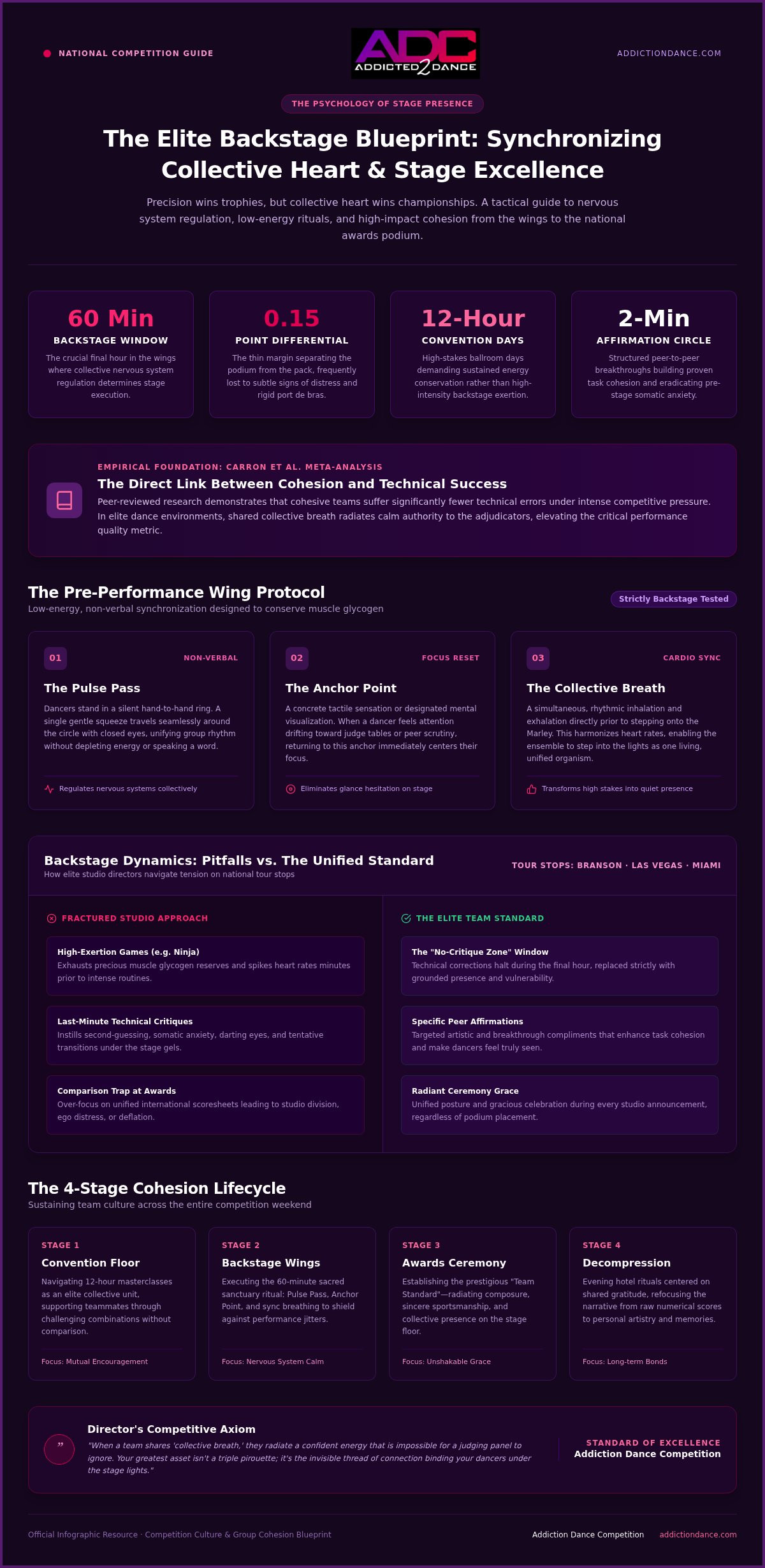
Synchronicity is more than just hitting a beat at the same time. It's about emotional regulation. A landmark meta-analysis on group cohesiveness and unity by Carron et al. demonstrated a strong positive correlation between team unity and athletic success. In the dance world, this translates to fewer technical errors under pressure. When a team shares "collective breath," they radiate a confident energy that's impossible for a judging panel to ignore. A fractured team, conversely, shows subtle signs of distress, like darting eyes or rigid port de bras, which can cost those crucial 0.15 points that separate the podium from the pack.
Creating a Safe Space Amidst High Stakes
The final hour before a performance is a sacred window. Elite coaches establish a "no-critique zone" during this time, replacing technical corrections with high-energy affirmations. Your role is to be the authoritative, calming guide who filters out the noise of the convention center. Prestigious milestones like the Branson National Championship provide the perfect backdrop for this growth. By using team building activities for dance teams at competitions, you ensure the backstage area remains a sanctuary. This focus on radical grace allows dancers to enter the wings with vigor rather than somatic anxiety, turning a high-stakes moment into a life-changing memory of excellence.
Backstage and In-the-Wings: Low-Energy, High-Focus Bonding
The wings of a theater are a pressure cooker. While some suggest high-energy games like Ninja to pass the time, elite programs know better. You don't want to burn muscle glycogen or spike heart rates minutes before a high-stakes routine. Instead, the most effective team building activities for dance teams at competitions focus on nervous system regulation and non-verbal connection. It's about conserving energy while sharpening the mind.
Grounding Techniques for Pre-Performance Jitters
Precision begins with presence. The "Pulse Pass" is a cornerstone ritual for elite teams. Dancers stand in a silent circle, holding hands, and one dancer sends a gentle squeeze (the pulse) around the ring. As each dancer receives and passes the pulse, they close their eyes and sync their internal rhythm with the group. This builds a profound non-verbal connection without uttering a single word. Integrating relaxation techniques and breathwork into this circle helps lower somatic anxiety across the entire roster. The Anchor Point is a specific physical sensation or mental image a dancer returns to whenever their focus begins to drift toward the judges' table. By using a collective breath to sync heart rates before the music starts, the team enters the stage as one living, breathing organism.
The Power of the Affirmation Circle
Confidence is contagious. A structured two-minute affirmation session can transform a team's energy. Rather than generic "good lucks," encourage peer-to-peer compliments that focus on specific artistic growth or recent technical breakthroughs. This builds task cohesion, which research shows is the strongest predictor of reduced stage distress. Keep the tone soft and supportive to maintain a calm, prestigious atmosphere. When dancers feel seen by their teammates, they perform with a level of vulnerability and heart that scores high on performance quality. It's a sophisticated way to remind them that they're part of something superior.
Before you step onto the Marley, take a moment for collective visualization. Mentally walk through the routine's highlights, seeing every transition and formation as a perfect success. Use the "Silent Cheer" during transitions, communicating support through intentional eye contact and shared breath. These small, elite habits are what define a champion program. If you're ready to showcase this collective brilliance on a grander stage, explore the stops on our 2027 National Tour to find your next milestone stop.
Beyond the Stage: Bonding During Elite Masterclasses and Conventions
The convention ballroom is a high-energy sea of talent. With hundreds of dancers vying for space, it's easy for an individual to feel like just another number in the crowd. Elite programs don't let their dancers drift. They treat these crowded hotel ballrooms as a premier training ground for unity. By maintaining a strong team identity in a room of five hundred peers, your dancers signal that they belong at the pinnacle of the industry. It's about being a collective powerhouse that remains open to new influences without losing its core connection.
Maximizing the Convention Experience Together
Success at a convention starts with setting collective goals for the Elite Masterclasses. Perhaps the goal is for every dancer to move to the front during a specific combo or to master a complex floorwork sequence. Implementing team building activities for dance teams at competitions during these high-intensity workshops keeps the group aligned. Your dancers should act as high-energy hype-men for their teammates during across-the-floor combinations. A quick, enthusiastic cheer or a focused nod from a peer can instantly boost a dancer's confidence. After the session, engage in a Style Swap debrief. Sharing unique takeaways ensures the entire group benefits from individual moments of brilliance. Utilizing structured team-building activities like brief communication exercises during water breaks can help dancers process new information as a cohesive unit.
Unity in the Scholarship Audition Room
Audition rooms are the ultimate test of character. It's natural for teammates to feel the sting of internal rivalry when vying for the same dance competition scholarship. Elite teams reject this scarcity mindset. They view a teammate’s recognition as a victory for the entire program. Establish a Secret Signal, a subtle hand gesture or shared look, to provide silent support during high-pressure improv rounds. This non-verbal cue reminds the dancer they aren't alone under the spotlight. When faculty members announce winners, the team’s response must be unified and celebratory. This outward display of radical grace reinforces your status as a leader in the dance community. It shows judges that your dancers are sophisticated professionals who value shared passion over temporary trophies. This level of support is what transforms a group of talented individuals into a prestigious, unbreakable team.
Evening Decompression: Hotel and Travel Bonding Activities
A 16 hour competition day is an endurance test for both the body and the spirit. Once the stage lights dim and the team returns to the hotel, the focus must shift from high-stakes execution to restorative connection. While surface-level gestures like matching pajamas are fun, elite programs prioritize deep emotional resets. Integrating intentional team building activities for dance teams at competitions into your evening schedule transforms a simple hotel stay into a strategic bonding opportunity. These quiet moments are where the true foundation of a championship culture is built. By moving the conversation away from scores and toward shared experiences, you ensure your dancers remain resilient and enthusiastic for the duration of the event.
Restorative Rituals for Tired Dancers
Physical recovery is the perfect time for mental debriefing. Stretching and recovery circles allow dancers to tend to their muscles while engaging in soft-toned, meaningful conversation. Implementing team building activities for dance teams at competitions during this window helps bridge the gap between the adrenaline of the stage and the need for rest. Use the "Rose, Bud, Thorn" activity to structure the dialogue. Dancers share their "Rose" (a highlight), their "Bud" (something they're excited for tomorrow), and their "Thorn" (a challenge they navigated with grace). This practice promotes self-care as a non-negotiable team value, which is essential for maintaining peak performance throughout the 2027 National Tour. It's a sophisticated way to process the day’s intensity without lingering on technical critiques.
Building Lasting Memories Off-Stage
The "Gratitude Jar" is a premier tool for fostering a supportive atmosphere. Throughout the day, dancers and coaches drop anonymous notes of appreciation into the jar, which are then read aloud during a team dinner or evening huddle. These notes should celebrate personality, work ethic, and small acts of kindness rather than just podium placements. For travel time on the bus or plane, engage in light-hearted bonding games or create "Team Superlatives" that honor unique traits like "Most Resilient in the Wings" or "Best Support during Auditions." Evening decompression is vital for the next day's performance because it regulates the nervous system and prevents the emotional burnout that often follows a high-pressure awards ceremony. This intentional focus on the "Highlight Reel" of artistic breakthroughs ensures that every dancer leaves the weekend feeling like a valued part of a prestigious community. If you are ready to elevate your team's experience, view our upcoming tour dates and secure your spot.
The Awards Ceremony: Unified in Grace and Excellence
The awards ceremony is the emotional crescendo of the weekend. It's the moment where all the hard work, the late-night masterclasses, and the backstage rituals culminate. Elite teams don't leave their unity in the wings; they bring it center stage. Establishing a clear "Team Standard" for grace and excellence ensures that your dancers remain a prestigious unit, even when the spotlights are brightest. This is the ultimate test of the team building activities for dance teams at competitions you've practiced all weekend. It shows the judges and the community that your program is built on a foundation of professional excellence.
The "Hand-Squeeze Chain" is a powerful physical anchor during high-tension announcements. By staying physically connected, dancers share the adrenaline and the anticipation, reminding each other that they are a single, unbreakable entity. Whether you're waiting for a platinum adjudication or a top overall placement, that physical link prevents the isolation of individual anxiety. It turns a potentially stressful moment into a shared experience of collective heart.
Sportsmanship as a Prestigious Value
Elite behavior is a strategic choice. When other programs are called for top honors, a prestigious team models radical grace through sincere applause and unified posture. This level of sportsmanship is a hallmark of a superior program. Understanding the impact of professional adjudication is key to this mindset. As noted in our guide to adjudication, the true value lies in the expert feedback that drives long-term growth. True victory is defined by artistic evolution and the collective effort displayed on the Marley, far beyond the physical trophy in the lobby. It's about reaching the pinnacle of your own potential as a group.
The Final Huddle: Closing the Competition Weekend
The weekend shouldn't end with a score; it should end with a celebration of the journey. The "Post-Awards Celebration" is a non-negotiable ritual where the energy remains high regardless of the hardware earned. This reframes the entire experience, prioritizing shared community over temporary comparison. Before heading home, lead a soft-toned, expert-led final huddle. This closing ritual allows dancers to share their final thoughts and identify one specific technical or emotional lesson to take back to their studio training. It's the essential bridge between the high-energy tour environment and daily practice. By concluding with these intentional team building activities for dance teams at competitions, you ensure every dancer leaves with a sense of pride, momentum, and collective brilliance.
Ready to experience the ultimate supportive stage? Join the Addiction Dance 2027 Tour today!
Step Into the Spotlight as One
Unity is your ultimate competitive edge. By mastering strategic team building activities for dance teams at competitions, you transform individual talent into a synchronized, unstoppable force. From the silent focus of a backstage circle to the sophisticated grace of a unified awards huddle, these elite rituals define a championship culture. You've learned to regulate collective nerves and dominate the convention floor with poise. These aren't just games; they're the psychological foundation of a prestigious program.
Now, bring that brilliance to the premier stage. Addiction Dance provides a world-class platform featuring elite masterclasses with industry-respected professionals and high-energy production in iconic cities like Las Vegas and Miami. Our commitment to fair and professional adjudication ensures your team receives the high-standard feedback they deserve. Don't just compete; lead. Join a community that values excellence and celebrates every artistic breakthrough. Register for the 2027 National Tour and experience the Addiction difference. Your journey to the pinnacle of performance starts here. We can't wait to see your team shine.
Frequently Asked Questions
What are the best quick team bonding activities for backstage?
Focus on rituals that regulate the nervous system without burning energy. The Pulse Pass or a synchronized collective breath are superior choices for high-stakes moments. These activities build non-verbal connection instantly. Whether you're in Las Vegas or Miami, these quick moments ensure your dancers enter the stage as a unified, prestigious force. They replace frantic energy with a calm, authoritative presence that judges notice immediately.
How can coaches help dancers deal with comparison at competitions?
Shift the focus from the leaderboard to personal artistic growth. Encourage your dancers to celebrate the technical brilliance of their peers rather than viewing them as rivals. At Addiction events, we emphasize a supportive community. Use professional adjudication as a roadmap for excellence rather than a source of distress. Remind your team that their only true competition is the version of themselves that stepped onto the stage yesterday.
Can team building activities actually improve a dance teams score?
Absolutely. Implementing team building activities for dance teams at competitions directly impacts synchronicity and performance quality scores. Research shows that task cohesion reduces technical errors under pressure. When a team is emotionally unified, their timing and spatial awareness improve significantly. This collective heart radiates to the judging panel. It's the difference between a group of individuals and a premier, championship-caliber team that commands the entire room.
How do you bond a team with a wide range of ages at a convention?
Mentorship is the key to bridging age gaps during a busy weekend. Pair your senior dancers with juniors as "Convention Buddies" to navigate Elite Masterclasses together. This creates a sense of shared responsibility and prestige across all levels. Encourage them to share takeaways from different style rooms during lunch breaks in cities like Houston or Chicago. This unified identity ensures every dancer feels like a vital part of your studio's elite legacy.
What should a coach do if there is tension within the team during a competition weekend?
Address the friction immediately with a quiet, authoritative reset. Pivot the group back to their shared goals and the excitement of the high-production environment. Use a grounding ritual like a silent affirmation circle to diffuse the tension. It's vital to maintain a "no-critique zone" during these high-stakes moments. Remind them that excellence is only possible when the team operates as a supportive, prestigious unit.
Are there bonding activities that dont require extra time in the schedule?
Yes, you can integrate connection into your existing routine. Use the travel time to tour stops in Akron or Richmond for light-hearted, non-dance games. Incorporate "Secret Signals" of support during transitions or while stretching. These small, elite habits don't need a separate block in your itinerary. They turn every moment of the weekend into an opportunity for team building activities for dance teams at competitions without adding stress to your schedule.
How can we celebrate as a team if we didnt win the top award?
Celebrate the "Highlight Reel" of artistic breakthroughs and personal bests. A successful weekend is defined by growth and collective effort, not just hardware. Host a post-awards celebration to honor the specific technical milestones achieved on the Addiction stage. Whether you're in Minneapolis or Nashville, focus on the memories made and the lessons learned. This resilient mindset is what separates good teams from truly elite, championship-winning programs.


