
What if the most intimidating moment of your season was actually the most transformative gift for your artistry? It's easy to view the judge's table as a barrier. In reality, the right professional judged dance competition is a gateway to your next level of excellence. You've likely felt that rush of anxiety when the music fades and the scoring begins. You wonder if the feedback will be fair. You worry if the critiques will truly help you grow or simply leave you feeling discouraged.
I understand those nerves because I've spent my life on both sides of the stage. We believe that adjudication should be a masterclass in disguise. In this guide, you'll discover how professional evaluation transforms every performance into a blueprint for success. We'll explore the clarity of scoring criteria and how to use expert feedback to fuel your technical growth. From our 2027 National Tour to the elite masterclasses that follow, we're here to ensure you leave the stage feeling empowered, seen, and ready to reach your pinnacle. It's time to turn every score into a source of inspiration.
Key Takeaways
- Discover how a professional judged dance competition serves as a curated masterclass where industry experts champion artistic integrity.
- Learn to decode scoring systems by viewing technical and performance data as a roadmap for your dancer’s seasonal progress.
- Uncover the secret to turning constructive critiques into a powerful tool for technical refinement and artistic growth.
- Prepare your dancers with a blend of physical precision and mental confidence to shine under the elite standards of professional evaluation.
- See how our 2027 National Tour creates an environment of excellence where every performance is met with mentorship and high-production energy.
What Defines a Professional Judged Dance Competition?
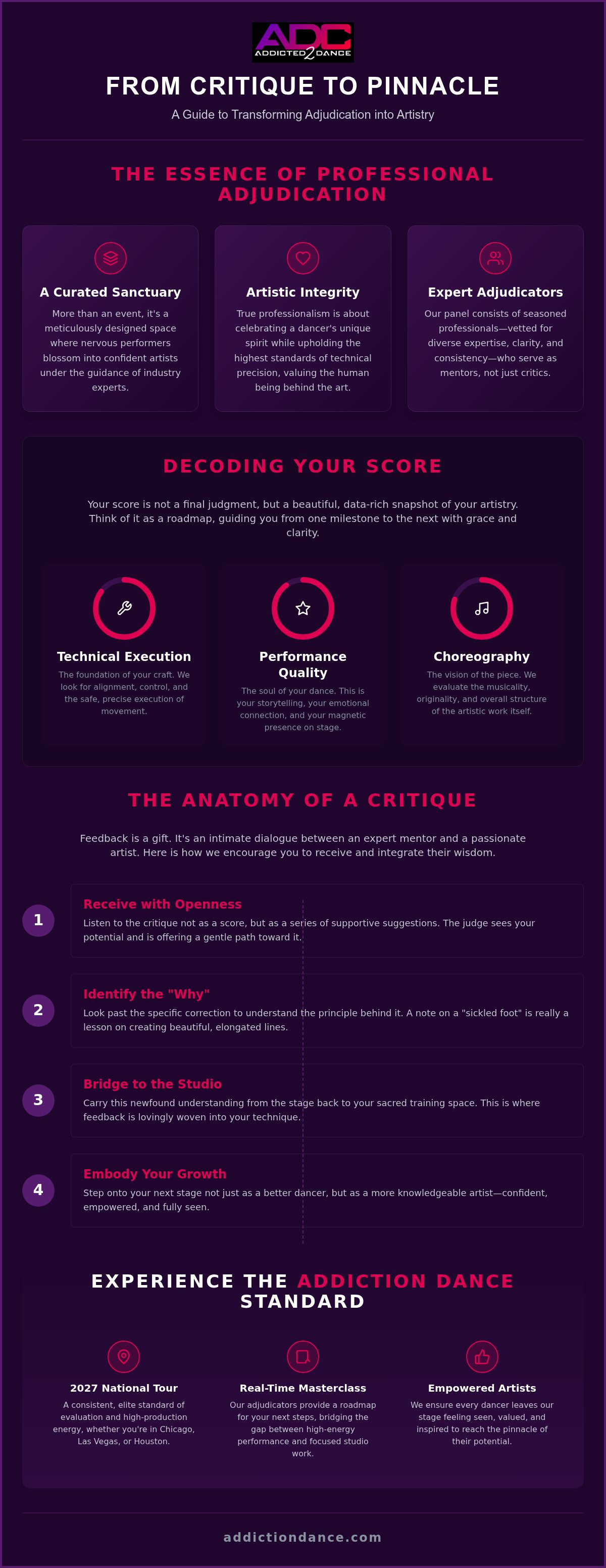
A professional judged dance competition is more than a weekend event; it's a curated sanctuary for artistic growth. I've seen how the right environment transforms a nervous performer into a confident artist. These spaces don't just happen. They're meticulously designed by industry experts who provide objective, high-level feedback. It's a high-stakes setting that breathes life into your training, offering a polished atmosphere where excellence is the only standard that matters.
True professionalism transcends a simple score. It's about preserving artistic integrity while pushing the boundaries of what's possible on stage. The structure of competitive dance has evolved to demand more than a trophy; it requires a deep understanding of developmental milestones. We believe that true adjudication balances technical precision with a celebration of the dancer’s unique spirit. It's a gentle, sophisticated approach that values the human being behind the technique.
The Vetting Process: Who Sits at the Table?
The prestige of an event is defined by the caliber of its panel. We don't just invite anyone to sit at the table. Our judges are seasoned professionals with extensive backgrounds in global performance, elite choreography, or high-level education. They bring a wealth of knowledge that ensures every genre is respected and understood. This vetting process is vital for several reasons:
- Diverse Authority: Panels are balanced to score ballet, hip hop, and musical theatre with equal expertise.
- Communication Clarity: We prioritize judges who speak with empathy and clarity, ensuring their message is accessible.
- Consistency: Professionalism means a dancer receives the same high standard of evaluation from the first routine to the last.
The Role of the Adjudicator as Mentor
I believe a professional judge looks past the sequins and the costume to see the heart of the performer. Their role isn't to be a critic; it's to be a mentor who happens to hold a microphone. They provide a roadmap for the dancer’s next steps, bridging the gap between the high-energy stage and the quiet focus of the studio. This mentorship is what makes our 2027 National Tour so distinct.
When an adjudicator speaks, they're offering a masterclass in real-time. They identify the technical "why" behind a movement and offer a soft, encouraging path toward improvement. This connection creates a sense of community and shared passion. It ensures that every dancer, regardless of their score, leaves the stage feeling seen, valued, and inspired to reach the pinnacle of their potential.
Decoding the Scoring System: Understanding the Numbers
Numbers on a score sheet are more than just a rank. They're a high-definition snapshot of a dancer’s current technical and artistic standing. When you step into a professional judged dance competition, you aren't just looking for a trophy. You're looking for data. I've found that the most successful studio owners use these scores as a seasonal compass to track progress from the first regional to the final championship. It’s about understanding the "why" behind the digits.
A score is typically a composite of three pillars: technical execution, performance quality, and choreography. Technical points focus on the mechanics. Think alignment, turnout, and the safety of every transition. Performance quality leans into the soul of the piece. It evaluates storytelling and that magnetic connection with the audience. Finally, choreography scores look at the vision and musicality of the work. This balanced approach ensures that a high-scoring routine is both safe and soul-stirring.
Understanding award tiers is equally vital for managing expectations. The difference between a "Platinum" and a "High Gold" isn't a failure; it’s a specific marker of growth. On our 2027 National Tour, we maintain a rigorous standard of consistency. A score in Chicago carries the same weight and prestige as one in Las Vegas or Houston. This transparency allows you to plan your season with confidence, knowing the evaluation is fair and elite.
Technical vs. Artistic Merit
Precision meets passion at the judges' table. While a judge’s eye is trained to spot a sickled foot or a dropped shoulder, they're equally attuned to the emotional resonance of a performance. A professional panel knows how to weigh these fairly. They ensure that a technically perfect dancer who lacks expression is guided toward artistry, while a charismatic performer is encouraged to refine their foundation. It’s a holistic view of the artist.
Category Breakdown and Skill Levels
Fairness is the cornerstone of any prestigious event. We differentiate between solos, duos, and large groups to ensure like is compared with like. Beyond the number of dancers, skill levels (Recreational, Competitive, and Elite) provide a level playing field. By grouping dancers by experience, skill levels ensure that every student feels celebrated for their current achievements while keeping their passion for growth alive.
The Anatomy of a Critique: Turning Feedback into Growth
Critiques are the soul of the competitive experience. They transform a three minute routine into a lifelong lesson in artistry. In a professional judged dance competition, these audio files are your most precious asset. They shouldn't be feared. Instead, they should be celebrated as a personalized masterclass delivered straight to your studio. A truly elite judge provides more than a list of errors; they offer a roadmap to excellence. They deliver feedback with a soft, nuanced inflection that respects the dancer’s journey while demanding the highest standards of performance.
The best feedback addresses both the "what" and the "how." It’s one thing to hear that a foot is sickled; it’s another to receive a specific exercise to strengthen the ankle. This level of detail is what separates a standard event from a prestigious one. When judges act as mentors, they bridge the gap between the high stakes of the stage and the daily discipline of the studio. It creates an environment where every dancer, regardless of their score, leaves with the tools to reach their pinnacle.
How to Listen to Your Audio Critiques
Listen with an open heart. I always tell my students that corrections are gifts of knowledge. For parents, this is a beautiful opportunity to model resilience. Sit with your dancer and identify recurring themes across different judges. If three separate experts mention the same technical hurdle, you've found your most impactful area for improvement. Use these insights to set specific goals for your next rehearsal. This turns a subjective score into an actionable plan for success.
Bridging the Gap: From Judge to Studio
Professional feedback is designed to support the work already being done by the studio teacher. Sometimes, a fresh perspective is all it takes for a technical concept to finally "click" for a dancer. It reinforces the hours of training spent in class and adds a layer of global industry authority to the message. This synergy is vital for long term growth. To see how this feedback loops into your broader training, explore our guide on Elite Mastery: Navigating the Dance Competition and Convention Circuit in 2027.
Listening together as a studio fosters a culture of shared learning and humility. It removes the ego from the equation and replaces it with a collective drive for prestige. When a dancer understands that every critique is an invitation to improve, their potential becomes limitless. We're here to ensure that every word spoken into that microphone serves as a catalyst for your next great performance.
How to Prepare Your Dancers for Professional Evaluation
Preparation is the invisible thread that connects a studio rehearsal to a standing ovation. It's a journey of refinement. When you enter a professional judged dance competition, the stage demands more than just memory; it requires presence. I've found that the most successful dancers are those who understand the technical requirements of the professional stage before they ever step into the wings. It's about aligning your physical training with the specific expectations of an elite panel. This foresight ensures that every movement is intentional and every transition is polished.
Mental readiness is just as vital as physical rehearsal. I always encourage my dancers to feel empowered by the opportunity to share their art. They shouldn't feel intimidated by the judges' table. By focusing on the process of the performance rather than the result of the trophy, we strip away the anxiety that hinders growth. This mindset allows them to acclimate to high-pressure environments with a sense of grace and poise that is truly sophisticated. It turns a high-stakes moment into a celebratory milestone.
The Pre-Competition Checklist
Success is often found in the details. Before the curtains rise on our 2027 National Tour, ensure your team is aligned with these essential steps to maximize their potential:
- Analyze the Rubric: Review the specific scoring criteria to ensure your choreography highlights the required technical elements and artistic nuances.
- Curation Matters: Ensure costumes and music choices are age-appropriate and serve to enhance the storytelling rather than distract from it.
- The Mock Panel: Practice performing for observers in a "mock" setting to build confidence and normalize the feeling of being evaluated by experts.
Leveraging Masterclasses for Technical Edge
Masterclasses are a secret weapon for the competitive dancer. They offer a low-stakes environment to receive feedback before the high-stakes competition begins. When dancers learn from the same professionals who sit on the judging panel, they gain an intimate understanding of the expected standard. It’s a chance to refine their technique in a supportive, educational atmosphere that values growth over perfection. This experience builds a bridge of familiarity between the student and the adjudicator.
This level of preparation does more than just improve a score. It opens doors to future opportunities and career paths. To understand how your hard work can translate into tangible benefits, explore The Master Guide to Dance Competition Scholarships: 2026-2027 Season. When you're ready to see your dancers shine on a premier stage, you can register for our 2027 National Tour and experience the difference of elite adjudication.
Experience Excellence: The Addiction Dance Competition Standard
At Addiction, I've always felt that the stage is a sacred space. It should reflect the relentless passion and discipline your dancers bring to the studio every day. Our 2027 National Tour is designed to be that mirror, offering a professional judged dance competition experience that prioritizes growth and artistic integrity. We bring elite adjudication to premier stages in cities like Chicago, Miami, and Houston, ensuring that every performance is met with the prestige it deserves. It’s an environment where high-energy production meets a sophisticated, family-friendly atmosphere. We've worked hard to ensure every child feels seen, heard, and celebrated throughout their journey with us.
Our professional panels are the heart of this experience. They aren't just there to assign numbers; they're selected for their unique ability to inspire excellence through gentle, expert guidance. When you participate in our professional judged dance competition, you’re engaging with a team that values the emotional well-being of the dancer as much as their technical precision. We believe that a critique should leave a student feeling empowered rather than defeated. We turn judgment into a joyful, life-changing event that honors the artist behind the athlete.
A Tour Designed for Every Dancer
Our commitment to quality is unwavering across the map. Whether your dancers are performing in Akron, Omaha, or Boston, the standard of judging remains impeccably high. We believe in geographical excellence, bringing the same elite panel and production value to every stop. This journey culminates at our Branson National Championship. It’s the pinnacle of the season, where professional evaluation meets a high-energy celebration of everything your studio has achieved. For a full look at our upcoming stops and city details, explore The Ultimate Stage: Your 2027 National Tour Guide.
The Addiction Difference: Heart and High-Energy
We've created a space that balances professional standards with an atmosphere that feels like home. It’s about the "Addiction Difference." We know that grandparents and friends often can't travel to every city, which is why our livestream access is such a vital part of our mission. It ensures that family members everywhere can share in the dancer’s professional debut in real-time. It’s a celebratory experience that builds community and fosters a shared love for the art of dance. Join us on the 2027 tour and see how we transform the competitive stage into a platform for pure joy and technical brilliance.
Step Into Your Pinnacle of Performance
The journey through a professional judged dance competition is about much more than a final placement. It's a transformative experience that refines your technique and elevates your artistry. By decoding the scoring system and embracing every critique as a gift, you turn the stage into a platform for lifelong growth. We've seen how the right mentorship can ignite a dancer's potential, bridging the gap between the studio and the spotlight.
As the fastest-growing dance competition in America, we're committed to providing high-energy production paired with family-friendly values. Whether you're aiming for our Branson National Championship Flagship or joining us for a regional stop, you'll find an environment that celebrates your hard work with expert grace. Join the 2027 National Tour and experience the Addiction Standard today. It's time to let your passion shine on a stage that honors your dedication. We are so excited to witness the incredible artist you are becoming.
Frequently Asked Questions
What qualifications do the judges have at professional dance competitions?
Judges at a professional judged dance competition are elite industry experts with decades of experience. They bring sophisticated backgrounds from Broadway, commercial dance, and prestigious university programs to the table. We meticulously vet our panels to ensure they understand technical milestones for every age. Whether we are in Chicago or Philadelphia, you'll find mentors who provide expert feedback. They offer a roadmap for every dancer to reach their next technical peak.
How is the scoring different between recreational and elite levels?
We use specific skill levels to protect the confidence of developing dancers and ensure fair comparisons. In the Recreational level, adjudication focuses on the joy of performance and foundational basics. For Elite dancers, the scrutiny is much higher. Judges look for advanced technical precision, nuanced artistry, and complex musicality. This system ensures dancers in cities like Miami and Houston are judged fairly against peers with similar training hours.
Can I talk to the judges after my dancers performance?
To maintain the highest standards of fairness and professional integrity, we don't allow direct contact with judges during the event. This ensures a level playing field for every studio. However, the connection doesn't end on stage. Our audio critiques provide a private, one-on-one masterclass experience. You'll hear the judge’s gentle, expert voice guiding your dancer through every transition. It offers more value than a brief conversation ever could.
What happens if there is a tie in the scores?
Ties are a testament to the incredible talent we see on our 2027 National Tour. When total scores are identical, we typically look to the technical execution category as the first tie-breaker. If a tie remains, the judges deliberate to reach a consensus based on overall performance quality. This methodical approach ensures that every award reflects a clear standard of excellence. It remains consistent whether we are in Las Vegas, Boston, or Minneapolis.
How do judges handle inappropriate music or choreography?
We are deeply committed to a family-friendly atmosphere at every event. Our judges are trained to identify music or choreography that isn't age-appropriate for the performer. Such routines may receive point deductions or be disqualified from high-score awards. We believe in celebrating the innocence and spirit of young dancers. This standard remains firm in all locations, from Akron to Nashville, ensuring a safe and prestigious environment for our families.
Why do different competitions give my dancer different scores for the same routine?
Dance is a living art form, and every professional judged dance competition panel brings a unique perspective. A routine performed in Omaha might receive a different score in Detroit due to the specific priorities of the judges. Some experts focus on storytelling, while others prioritize technical alignment. Additionally, a dancer’s performance can vary between events. These variations are why attending multiple stops on a tour is so valuable for technical growth.
How can I use the audio critiques to help my dancer improve at home?
I suggest listening to audio critiques together as a family or studio. Use the judge's gentle inflection to identify recurring technical themes. If a judge in Grand Rapids mentions core stability, use that as a specific goal for your next rehearsal. This turns a high-stakes performance into a personalized masterclass you can access anywhere. It’s a powerful tool for bridging the gap between the competition stage and your daily training routine.
Are the judges at the regional events the same as the national championship?
We maintain an impeccably high standard for our panels at every stop on the tour. While you might see different faces across the 2027 National Tour, the caliber of expertise remains identical. Our Branson National Championship features an elite selection of judges who have seen the season’s growth. Whether you are in Milwaukee or St. Louis, you can trust that the evaluation is professional, fair, and designed to inspire your pinnacle of excellence.


