
Winning a dance competition hip hop title in the 2026-2027 season isn't just about technical tricks. It's about the sophisticated soul your dancers bring to the stage. You probably know the frustration of a routine feeling a bit too jazzy when it should feel grounded. It's a challenge to clean a performance without stripping away its raw, authentic energy. I understand that you want your dancers to look polished while maintaining their edge. You deserve to feel fully prepared for the high-stakes environment of a premier national event.
This guide offers a clear roadmap to mastering the fusion of street foundations and high-stakes stagecraft. We'll cover everything you need to achieve elite status at your next national tour stop. You'll learn how to select family-friendly music that still feels fresh and how to choose the perfect category for your team's unique strengths. We will explore the nuances of 2027 requirements to ensure your vision translates perfectly to the judges. Let's ensure your choreography is ready for the prestigious spotlight of the upcoming season with confidence and grace.
Key Takeaways
- Learn to bridge the gap between studio choreography and authentic street foundations to meet the high standards of the 2027 season.
- Master the paradox of cleaning a dance competition hip hop routine while maintaining the raw, grounded energy that defines the genre.
- Develop a strategic roadmap for choosing categories and age divisions that showcase your dancers' peak performance levels.
- Refine your team's artistry through music editing and facial expressions that move beyond clichés to deliver a sophisticated performance.
- Understand how elite training opportunities like masterclasses can elevate your dancers to national title status on the premier tour stage.
Understanding the Hip Hop Category: Foundations and Evolution
Elite hip hop is a masterclass in controlled chaos. On a prestigious national tour, this category demands more than just synchronized movements; it requires a deep understanding of rhythm and cultural history. Many routines fall into the trap of looking "too jazzy." This happens when choreography prioritizes clean, vertical lines over the essential weight of street dance. To succeed in a dance competition hip hop environment, you must bridge the gap between studio precision and the raw energy of the streets. Judges are not just looking for tricks. They are looking for a soul that resonates through the floorboards.
The primary indicator of elite placement is "the groove." It is the invisible thread that connects a dancer to the music. If a routine lacks this rhythmic pulse, it feels hollow, regardless of how many backflips the dancers perform. Respecting the culture means acknowledging that hip hop is a social and political expression. When your team steps onto the stage, they should carry that weight with them. Peak performance is achieved when high-stakes stagecraft honors these authentic roots without losing the "cool" factor that makes the genre so captivating.
The Core Elements of Competitive Hip Hop
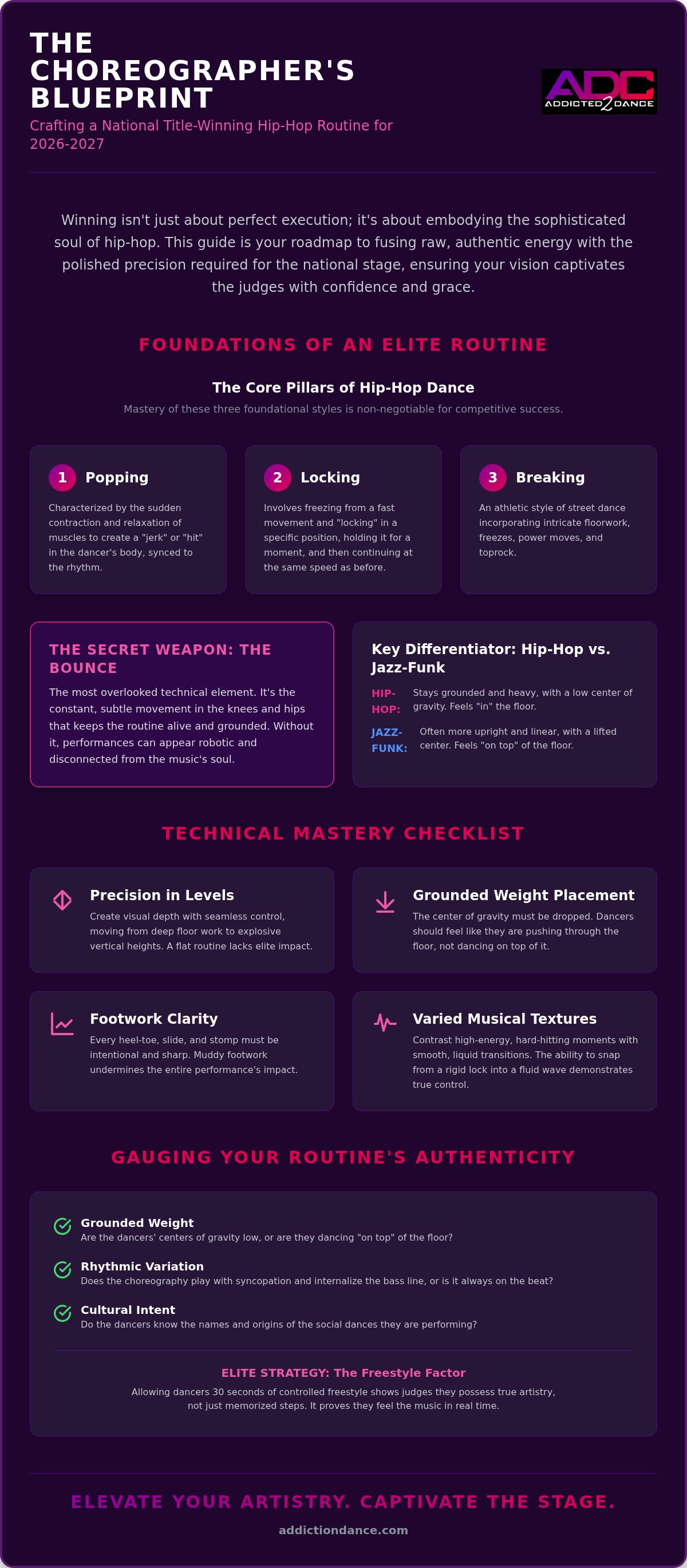
Success starts with mastering the "Big Three." Popping involves sudden muscle contractions. Locking requires distinct, sharp freezes. Breaking adds the athletic floor work that wows the crowd. While these hip-hop dance styles have evolved, their fundamentals remain non-negotiable. The most overlooked technical element in scoring is "the bounce." It is the constant, subtle movement in the knees and hips that keeps the routine alive. Without it, the performance becomes robotic. This is the main difference between dance competition hip hop and jazz-funk. Jazz-funk is often more upright and linear, while true hip hop stays grounded and heavy.
Evaluating Your Routine’s Authenticity
Authenticity isn't about being "old school." It's about intentionality. Use this checklist to ensure your choreography stays true to the craft:
- Grounded Weight: Are the dancers' centers of gravity low, or are they dancing "on top" of the floor?
- Rhythmic Variation: Does the choreography play with syncopation, or is it always on the beat?
- Cultural Intent: Do the dancers know the names and origins of the social dances they are performing?
Integrate social dances like Litefeet or the Wop naturally. They shouldn't feel like a checklist item. Beyond this, consider "freestyle" segments. Allowing your dancers thirty seconds of controlled freestyle shows the judges they possess true artistry. It proves they aren't just executing steps; they are feeling the music in real time.
The Technical Checklist: Movement and Execution
Technical mastery in a dance competition hip hop setting goes far beyond simply hitting the beat. It requires a sophisticated understanding of how to manipulate space and energy. Precision in levels is your first priority. Dancers must move from deep floor work to explosive vertical heights with seamless control. This creates the visual depth that separates amateur routines from elite performances. Without these shifts, a routine can feel flat and one-dimensional. You want the judges to see a landscape of movement that keeps their eyes dancing across the stage.
Weight placement is the foundation of this control. In many genres, the center of gravity is lifted. In hip hop, it must be dropped. Dancers should feel like they are pushing through the floor, not dancing on top of it. This groundedness allows for footwork clarity that is visible even from the back of a massive convention center. Every heel-toe, slide, and stomp must be intentional and sharp. If the footwork is muddy, the entire performance loses its impact. Clarity starts from the ground up, ensuring every intricate step translates to the audience.
Mastering the Groove and Texture
Teaching dancers to "sink" into the music is a delicate process. It requires them to internalize the bass line rather than just counting the snare. This connection to Hip-Hop culture ensures that movement feels lived-in rather than practiced. Varying textures is equally vital. Your routine needs high-energy, hard-hitting moments contrasted with smooth, liquid transitions. Use isolation drills to build the body control necessary for these rapid shifts. Dancers should be able to snap from a rigid lock into a fluid wave in a single count. If you want to refine these technical nuances before your next event, exploring our Elite Masterclasses can provide that professional edge.
Synchronization and Spacing
The "Cleanliness Paradox" is a common struggle for studio owners. You want a sharp performance, but over-cleaning can make a routine feel robotic. Unison in hip hop is about shared energy more than identical angles. Dancers should breathe together. Their spacing should be dynamic, utilizing formations that ripple and expand to mirror the music's layers. When cleaning group numbers, focus on the "vibe" first. Ensure the group feels like a cohesive crew rather than a line of individuals. Check that everyone is hitting with the same intensity. If one dancer is at a ten and another is at a six, the formation breaks. This collective spirit is what truly commands the stage at a high-level national tour.
Performance and Artistic Checklist: Stage Presence and Visuals
The first beat drops and the atmosphere shifts instantly. This is the moment your dancers claim their space. Commanding the spotlight at a premier dance competition hip hop event requires an intangible quality often called the "X-Factor." It starts with an unwavering confidence that radiates before the first movement even begins. Your team shouldn't just wait for the music; they should own the silence that precedes it. This level of presence tells the judges that they are about to witness something elite and intentional.
Performance artistry is where many routines either soar or stall. I often see dancers rely on a generic "tough" expression, frequently called the "hip hop face." While intensity is good, it shouldn't be static. Genuine performance involves a range of emotions that reflect the music's nuances. Encourage your dancers to connect with the panel through their eyes and energy. They should tell a story through their presence, moving beyond clichés to show a sophisticated understanding of the movement's intent. When a dancer truly feels the rhythm, the audience feels it too.
The Visual Impact of Your Routine
Visual storytelling depends heavily on your choice of attire. Costuming for the elite stage is a delicate balance of being edgy and remaining family-friendly. You want your dancers to look current, but their clothing must never hinder their performance. Avoid oversized layers that swallow the "grounded weight" and "technical precision" we discussed in previous sections. If the judges can't see the knees or the placement of the spine, you lose points on execution. Instead, opt for tailored streetwear that enhances every isolation and level change. Remember, on a high-production stage like the Branson National Championship, lighting will catch every detail. Your visual choices should complement the high-energy environment of a national tour.
Music and Audio Standards
Your music is the heartbeat of the routine. It needs to be a professional, high-energy mix that guides the judges through a clear narrative arc. A successful mix includes:
- A Compelling Beginning: An immediate hook that demands attention.
- Rhythmic Variation: Changes in tempo that allow for the "texture" shifts mentioned earlier.
- A Power Ending: A final, high-impact moment that leaves a lasting impression.
Selection is key. Choose tracks that are fresh and edgy but respect the standards of a professional judging panel. Every transition between songs should be seamless. If a mix feels choppy or the audio quality is poor, it distracts from the artistry on stage. A clean, well-produced soundtrack is a hallmark of a studio that values excellence in every facet of their performance, and for those who want to bring this same level of professional audio quality to their own studio showcases, Easy Cee Entertainment offers the expert DJ and emcee services needed to make every event a success.
Managing a studio during the 2026-2027 season requires a strategic eye for placement. Choosing between a Small Group, Large Group, or Line is more than just a numbers game. It's about maximizing the visual impact of your choreography. For instance, a dance competition hip hop routine with complex, fast-paced formations often thrives in a Large Group setting. Here, the sheer volume of movement creates an overwhelming sense of power. Conversely, if your dancers possess exceptional individual texture and isolation skills, a Small Group might allow those nuances to shine more brightly. It's your job to decide where their talent will be most undeniable.
Strategic Category Placement
Start by analyzing your dancers' collective strengths. A balanced roster for the 2027 season should showcase versatility and growth. While hip hop is your focus, showing range across different categories can elevate your studio’s overall prestige. I recommend reviewing our Guide to Dance Competition Group Categories for Studios to ensure your entries align with the specific scoring advantages of each group size. Age division strategies are equally critical. You want to challenge your dancers without overwhelming them. Placing a young but talented team in a higher division can be a great growth tool, provided they have the technical foundation to compete at that level.
Registration and Tour Readiness
Logistics are the backbone of a successful season. Early bird registration for the 2027 National Tour is essential for securing your preferred cities. Whether you're aiming for Chicago, Las Vegas, or Miami, planning ahead ensures a smooth experience for your families. Competition weekends are high-energy environments. Managing parent expectations is key to maintaining a focused, professional atmosphere. Remind your families that the goal is elite performance and artistic growth. As you prepare for the flagship Branson National Championship, which takes place July 5-11, 2027, ensure your team is mentally ready for the scale of the Branson Convention Center. It's a high-stakes environment that rewards those who are prepared.
The journey from the studio to the national spotlight is a marathon. Every decision, from category selection to travel logistics, builds the foundation for your success. It's about leading with confidence and a clear vision for your dancers' future. If you're ready to secure your spot on the most prestigious stage of the season, register for the 2027 National Tour today and take the first step toward achieving elite status.
Elevating Your Performance with Addiction Dance
The Addiction Dance stage is where elite preparation meets professional opportunity. It's the premier choice for showcasing refined artistry in a dance competition hip hop setting. Here, your dancers aren't just another number. They are part of a high-energy, prestigious event that celebrates every nuance of their hard work. I believe the right environment catalyzes a team's growth. It turns a strong routine into a national masterpiece. Your dancers deserve a platform that matches their ambition.
Elite Masterclasses and Conventions
Preparation is the secret language of champions. Our Elite Masterclasses offer your team the chance to learn from industry-respected choreographers. These experts understand the pulse of modern movement. These sessions go beyond learning steps. They refine the "groove" and "texture" we've explored throughout this guide. When your dancers receive instruction from experts who also serve as judges, their scores naturally rise. Our staff provides a supportive, professional environment. Every dancer feels seen. Every dancer is challenged. You can discover more about our vision in the 2027 National Tour Guide.
The Road to the Branson Nationals
The journey begins at our nationwide stops in cities like Chicago, Las Vegas, and Miami. Each regional event is a vital stepping stone. They lead directly to our flagship experience: the Branson National Championship. From July 5-11, 2027, the Branson Convention Center becomes the center of the dance world. It's a life-changing event. The hip hop category takes center stage under high-production lights. At Branson, your team will experience:
- High-production stagecraft that elevates every isolation and level change.
- Professional feedback from industry-respected experts who value authenticity.
- A celebratory atmosphere that rewards artistic excellence and hard work.
Earning titles and scholarships at this level is a testament to your studio's dedication. It's about more than the trophy. It's about the confidence your dancers gain standing among the best in the country. My team is committed to providing a stage that honors your vision. We push your dancers toward their peak performance. The 2026-2027 season is your time to shine. Join the elite circuit today. Let's make your mark on the dance competition hip hop stage together.
Claim Your Place on the National Stage
Mastering the 2026-2027 season requires a delicate balance of authentic street foundations and sophisticated stagecraft. You've learned how to preserve the essential groove while polishing your routine for the highest level of scrutiny. By focusing on grounded weight and intentional textures, your dancers will stand out as true artists. Strategic category placement and professional music editing are the final pieces of the puzzle that ensure your studio's success at every tour stop. It's about more than just a performance; it's about making a statement that resonates with industry leaders.
We provide the ultimate platform for this excellence. With professional judging and high-energy production in cities like Las Vegas and Chicago, your team will experience the pinnacle of the dance competition hip hop world. The road leads to the prestigious Branson National Championship 2027, where elite titles await those who are prepared. I'm excited to see your vision come to life under our lights. Your journey toward national recognition starts with a single, confident step.
Register for the 2027 National Tour and secure your spotlight!
Frequently Asked Questions
What is the difference between hip hop and street dance in a competition?
Street dance represents the raw, cultural roots of the movement, while hip hop in a competition setting is a refined, choreographed presentation of those foundations. On our 2027 National Tour, we look for dancers who respect the authentic history of street styles while mastering the stagecraft required for a high-production environment. It's about taking that organic energy and channeling it into a clear, impactful performance that resonates with a professional judging panel.
How do judges score hip hop routines at a national level?
Adjudication focuses on technical execution, rhythm, and the "groove" that defines the genre. Elite judges at our national tour stops in cities like Chicago and Las Vegas evaluate how well a team maintains their center of gravity and weight. They look for precision in levels and clarity in footwork. A high-scoring routine demonstrates a sophisticated understanding of syncopation and texture, ensuring the performance feels authentic rather than just a series of steps.
What should dancers wear for a hip hop competition routine?
Select costumes that emphasize movement and reflect current urban trends while remaining family-friendly. Avoid overly baggy layers that might obscure technical precision or body isolations. Tailored streetwear is often the best choice for a dance competition hip hop routine. It allows the judges to see the grounded weight and spine placement essential for high scores. Ensure your footwear is clean and provides the necessary support for explosive jumps and intricate footwork.
Can a small studio compete effectively in the hip hop category?
Absolutely, as elite performance is defined by quality rather than the size of your roster. Small groups often have an advantage in showcasing intricate textures and individual artistry that can get lost in larger lines. By focusing on a clear roadmap and mastering foundational elements, a small studio can achieve elite status. Our 2027 National Tour celebrates excellence from every studio size, providing a prestigious stage for your dancers to shine in cities like Miami or Houston.
Are there specific music requirements for hip hop routines at Addiction?
We require high-quality, professional music edits that are appropriate for a family-friendly audience. Your mix should have a clear narrative arc with a compelling beginning and a high-impact power ending. While we don't restrict specific tracks, the selection should resonate with a sophisticated judging panel. Ensure all transitions are seamless. Poor audio quality can distract from the artistry of your dance competition hip hop routine and impact your overall score on the national stage.
What are the most common mistakes in competitive hip hop choreography?
The most frequent error is a routine feeling too jazzy or lacking a true, grounded groove. Choreographers sometimes prioritize synchronized arm movements over the essential bounce and weight of the hips. Another mistake is over-cleaning a routine until it becomes robotic. You must maintain that raw, street-inspired energy. Failing to vary textures between hard-hitting moments and smooth transitions can make a performance feel one-dimensional during a high-stakes event in cities like Las Vegas or Detroit.
How can I prepare my dancers for the energy of a national tour stop?
Immersion in a high-stakes environment is the best preparation. Attending our Elite Masterclasses allows your team to learn from industry leaders and adapt to a fast-paced convention setting. This builds the confidence needed to command the spotlight from the first beat. Practicing in full costume under performance-level lighting also helps. Your dancers should be ready for the electric atmosphere of stops in Minneapolis or Philadelphia before they reach the Branson National Championship stage.
Is there an opportunity for hip hop dancers to win scholarships?
Yes, we offer numerous scholarship opportunities through our competitions and conventions. Dancers who demonstrate exceptional technique, artistry, and potential are recognized by our professional judges. These awards can be life-changing, providing access to further elite training and masterclasses. At the Branson National Championship 2027, the hip hop category is a prime showcase for talent. It's a prestigious path for dancers looking to reach the pinnacle of their field and gain national recognition.


