

The most rewarding competition experience isn’t always the one with the biggest trophy. The right choice should honor a teen dancer’s goals as much as her talent. For families considering a dance competition for teens in Davenport IA, look for a meaningful performance goal and an atmosphere where a young dancer can feel supported, challenged, and proud of her work.
It’s natural to wonder whether competition will feel too stressful or put too much emphasis on awards. Start with the experience itself: a solo offers an individual spotlight, while a duo, trio, or group performance brings teamwork and shared preparation. Style, judging, travel, and your family’s schedule also shape the experience.
This guide will help you compare those choices and think clearly about your teen’s goals and readiness. You’ll learn what to consider across performance categories and dance styles, how professional judging and a family-friendly atmosphere can shape the day, and how to plan for the event. Addiction Dance Competition brings performance and learning opportunities together through regional and national competitions, dance conventions, elite masterclasses, and livestream access. The aim is to find a confident next step, without pressure to chase every award.
Key Takeaways
- Start with your teen’s goals, experience, preferred styles, and comfort performing to find an experience that feels like the right challenge.
- Compare solo, duo/trio, and group formats, then consider which styles best reflect your dancer’s interests and strengths.
- Professional judging can offer a chance to learn and grow. Look for an event atmosphere that makes room for encouragement alongside competition.
- When comparing a dance competition for teens in Davenport IA, weigh performance fit alongside event details and your family’s practical plans.
- Addiction Dance Competition combines regional and national performance opportunities with conventions, elite masterclasses, and livestream access.
What should Davenport teens look for in dance competitions?
A strong competition fit starts with the dancer, not the trophy table. For a teen in Davenport or elsewhere in the Quad Cities, the right event should reflect her goals, experience, preferred styles, and comfort performing before an audience. One dancer may be eager to step into a solo spotlight; another may feel more at ease sharing choreography with a partner or group. Neither choice is automatically better. The question is which experience feels motivating and manageable for her now.
A dance competition is a structured performance event where dancers present prepared work for adjudication and an opportunity to grow. It differs from weekly studio classes and ongoing team training: classes build skills over time, while a competition centers on a scheduled performance. For a broad introduction to the format and its history, see this Competitive Dance Overview.
How can a teen decide whether competition matches her goals?
Start with a calm conversation about what she hopes to gain. Is she working toward greater stage confidence, interested in professional feedback, or excited to perform with friends? Her answer can help narrow the kind of event experience that feels meaningful. Readiness matters, too. A teen who enjoys rehearsing and can handle the anticipation of performing may welcome the challenge, while another may prefer more time to build confidence first.
Awards and titles can be exciting, but they’re only one part of the experience. A dancer can value the preparation, performance, and feedback without receiving a particular result. Families can support that perspective by setting goals around effort, artistry, or trying something new, rather than treating placement as the sole measure of success.
What does a competition experience generally include?
Dancers present prepared choreography in categories such as solo, duo/trio, or group, then receive adjudication from judges. Addiction Dance Competition offers these performance categories in styles including ballet, jazz, hip hop, and musical theatre. This gives families two useful questions to consider: how does your teen want to perform, and which style best reflects her training and interests?
For Quad Cities families, local relevance is about more than finding an event nearby. It’s also about choosing a performance opportunity that fits the dancer’s current goals and the family’s schedule. Keep the distinction clear: a competition is a focused event, not a substitute for regular instruction or the steady preparation that happens through training.
Learning can extend beyond the stage, too. Dance conventions offer an educational experience alongside competition, with opportunities to learn from teachers and choreographers. For some teens, that added focus on development may be as appealing as performing. Begin by identifying what your dancer wants from the experience, then compare options with that goal in view.
Which competition formats and dance styles can teens explore?
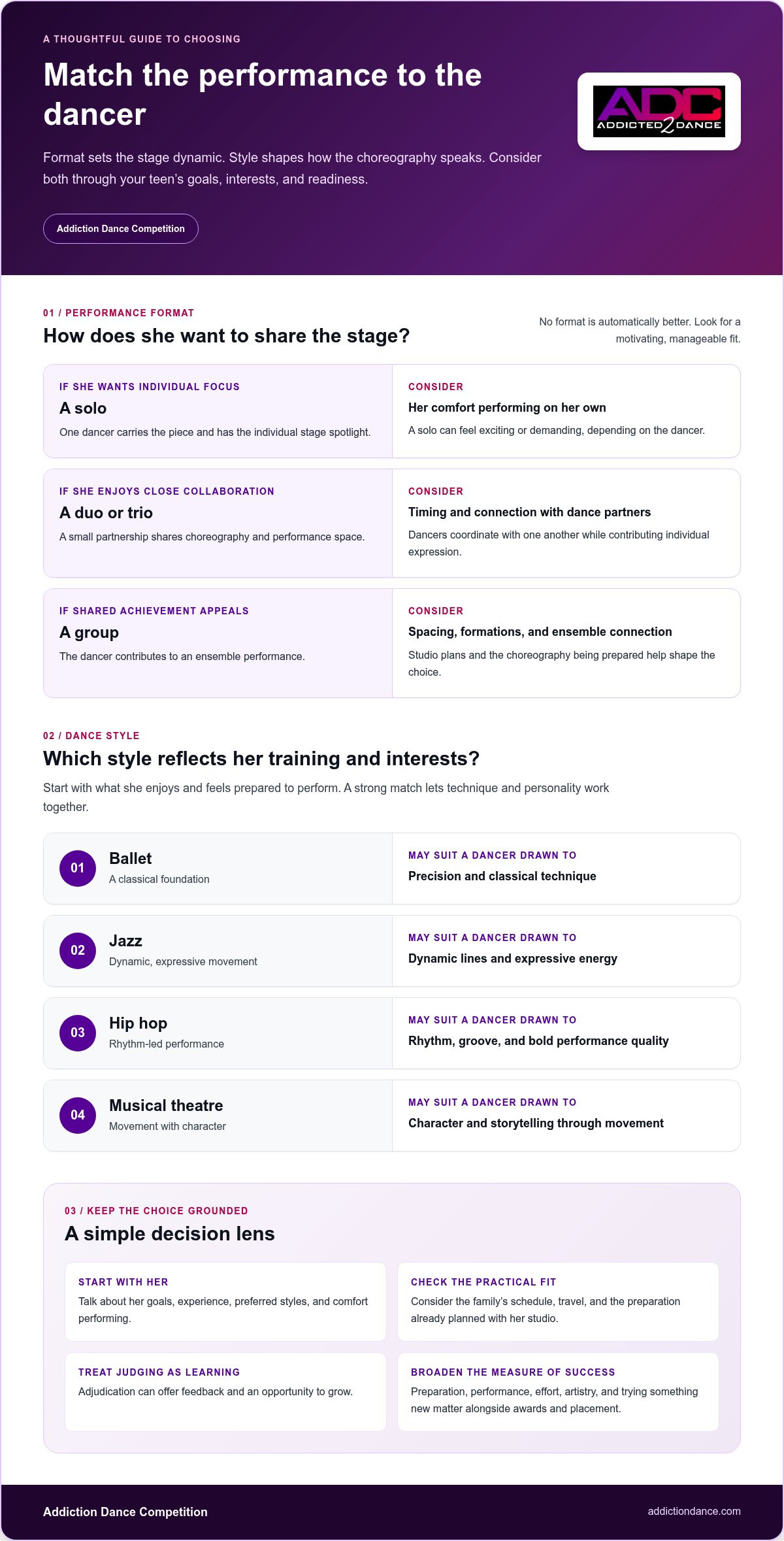
Once a teen has a sense of what she wants from competition, the next choice is how she wants to take the stage. Format shapes the performance dynamic: a solo centers one dancer, a duo or trio creates a small partnership, and a group brings an ensemble together. Style shapes the movement, musicality, and character she’ll bring to that performance. Together, these choices make the experience personal.
Format determines who shares the stage; style determines how the choreography speaks. For families comparing a dance competition for teens in Davenport IA, that distinction turns a broad set of options into a practical conversation about the dancer’s interests and preparation.
Is a solo, duo/trio, or group performance the better fit?
A solo can suit a teen eager to focus on individual stage presence and carry a piece on her own. It also places the performance spotlight squarely on her, which may feel exciting or demanding depending on her temperament. A duo or trio balances individual expression with close coordination: dancers share the choreography and respond to one another’s timing and movement.
Group work offers a different reward. The dancer contributes to a shared performance, where spacing, formations, and ensemble connection matter alongside her own execution. No format is inherently more advanced or worthwhile. Consider what your teen enjoys, what she’s preparing with her studio, and whether she’s drawn to individual focus, collaboration, or both. Studio plans matter because choreography and rehearsal are shaped by the dancers and the work being prepared.
How should teens choose a competition dance style?
Begin with the dancer’s training, interests, and performance strengths. A teen who enjoys precision and a classical foundation may feel at home with ballet; a dancer drawn to dynamic lines and expressive energy may gravitate toward jazz. Hip hop can appeal to someone who enjoys rhythm, groove, and a bold performance quality. Musical theatre offers room to bring character and storytelling into movement.
Addiction Dance Competition features ballet, jazz, hip hop, and musical theatre. Rather than choosing a style because it seems impressive, talk through where the dancer feels prepared and genuinely engaged. A strong match lets technique and personality work together.
Make the decision more concrete by having your teen name her first-choice format and style, then discuss how each aligns with her current training and the studio’s plans. If she’s drawn to more than one option, that’s helpful information, not a problem to solve immediately. The aim is a performance choice she can approach with commitment and curiosity.
Addiction Dance Competition brings performance categories and learning opportunities together through its events and conventions. Families exploring Addiction Dance Competition events can use these format and style questions to consider which experience best suits their dancer.
How can families assess judging, challenge, and a supportive atmosphere?
Competition can feel demanding without becoming a negative experience. A teen may feel nerves before performing, take pride in meeting a challenge, and still benefit from an atmosphere that treats dancers with care. For families considering a dance competition for teens in Davenport IA, the useful distinction is between healthy challenge and pressure that makes awards the only measure of success.
Consider how an event approaches judging, feedback, and the treatment of dancers. Professional adjudication brings a serious standard to the stage, while a positive, family-friendly atmosphere helps make the experience welcoming for dancers and supporters. Addiction Dance Competition provides professional judging in a positive, family-friendly environment. These qualities can matter to teens who want to be challenged while still feeling valued.
What should families understand about competition judging?
Adjudication is a professional evaluation of a performance, not a promise of a particular score, ranking, or award. Judges may bring different perspectives to the same piece, and a result reflects their assessment of that performance at that event. Treat feedback as one source of insight, rather than a final verdict on a dancer’s ability or potential.
Constructive adjudication helps dancers recognize what is working and where they can keep developing.
For a clearer sense of how scoring and feedback fit into competition, families can explore this professional dance competition judging guide. As you review judging information, focus on whether the process is explained clearly and the feedback is framed as part of learning. A thoughtful critique may point to details such as musicality, clarity, or performance quality. The value is in having something useful to reflect on, not in assuming every judge will respond identically.
Can a competitive event still feel positive for teens?
Yes. High standards and a supportive atmosphere can coexist. An event can take performance seriously while maintaining a welcoming, family-friendly environment. That balance doesn’t remove nerves or make every result predictable; it gives dancers space to rise to the occasion with encouragement and respect.
Before the event, talk with your teen about what she hopes to experience and how she might feel afterward, whether she’s energized, disappointed, proud, or a mix of emotions. Agree on a few measures of success within her control: completing the performance with focus, supporting teammates, or learning from feedback. This makes room for honest feelings without letting a ranking define the whole experience.
For Davenport and Quad Cities families, practical confidence comes from matching the event’s approach with the dancer’s needs. Consider whether she feels comfortable with performance and feedback, and whether the family can keep expectations grounded. A meaningful competition experience can include ambition and celebration while leaving space for growth, connection, and enjoyment of the dance itself.
How should Davenport-area families compare options and prepare?
A clear comparison can make the decision feel much more manageable. For families in Davenport and the wider Quad Cities, start with the teen’s priorities, then consider how each event’s format, published information, and practical arrangements fit. That keeps the choice grounded in the dancer’s real goals rather than excitement about awards alone.
- Identify the dancer’s goals. Is she hoping to build stage confidence, perform with friends, or gain experience in a particular style? A specific goal gives the family a useful standard for comparing opportunities.
- Match format and style. Consider whether solo, duo/trio, or group performance suits her interests and studio plans. Then compare the available styles with her training and the kind of choreography she wants to present.
- Review event information. Read the schedule, categories, rules, registration steps, and participation requirements. These details help families understand what the event involves and whether the planned performance fits.
- Plan family logistics. Use the event information to consider travel, attendance, and timing. Plans can differ depending on where an event is held, so avoid assumptions based only on a regional name.
What details should families compare before registering?
Compare event information side by side. Confirm that the dancer’s age, intended format, and style align with the event’s categories and requirements, then note relevant deadlines and schedule details. If her studio is coordinating the performance, include its plans in the discussion. A quick written comparison can reveal whether an appealing event is also a workable fit for the dancer and family.
For a broader view of a national event experience, families can explore the 2027 National Tour guide. It offers context for considering a tour opportunity alongside local and regional choices. Use the event’s published information for specific participation details.
How can teens prepare for an enjoyable event weekend?
Preparation is more than rehearsal. Invite your teen to revisit her performance goals with her studio and talk through what the event schedule and participation expectations mean for her. Families can plan attendance and travel around the published details, leaving room to focus on the performance rather than last-minute uncertainty. Keep the conversation supportive: preparation should help her feel ready, not add pressure to be perfect.
Livestream access lets supporters watch regional and national performances remotely, which can help family members who can’t attend in person. Families exploring a national performance opportunity can learn more about the 2027 National Tour as one option in their comparison.
Why consider Addiction Dance Competition for a teen dancer?
For Davenport-area families, Addiction Dance Competition offers regional and national events with professional judging and exciting production. Its events bring a dancer’s preparation to the stage and give her a chance to receive feedback in a positive, family-friendly environment. Addiction Dance Competition hosts events across the United States, serving dance communities in Davenport and cities including Chicago, Akron, Omaha, Richmond, Las Vegas, Minneapolis, Miami, Houston, Grand Rapids, Memphis, Detroit, Bloomington, Philadelphia, Pittsburgh, Boston, Nashville, St. Louis, Milwaukee, and Birmingham.
Teens can participate in solo, duo/trio, and group categories in styles that include ballet, jazz, hip hop, and musical theatre. These options let dancers consider how they want to perform, whether they’re drawn to an individual spotlight, a small partnership, or an ensemble. Families can use the categories and style information for each event to see what aligns with the dancer’s interests and studio plans.
What can teens gain from competition and convention opportunities?
Competition offers a performance opportunity and professional adjudication; conventions and elite masterclasses focus on learning. These experiences can complement one another, but each serves a distinct purpose. A dancer may value performing prepared choreography, reflecting on professional feedback, or developing through an educational opportunity. Addiction Dance Competition also offers opportunities to earn scholarships and special awards. These are possibilities, not guaranteed outcomes, so they’re best viewed as an additional avenue rather than the measure of a successful experience.
Families interested in scholarships can explore the dance competition scholarship guide for further context. Livestream access lets supporters watch performances remotely, extending the experience to family members who can’t attend in person.
What is the next step for Davenport-area dancers?
Begin with a conversation about what your teen wants from the event: a solo challenge, a shared performance, a particular style, or a chance to learn. Then explore Addiction’s event information and registration details. Review the published categories, schedule, rules, and participation requirements with her studio so the choice fits both her goals and the performance being prepared.
A thoughtful match can make the next step feel exciting without making it feel rushed. Whether your dancer is considering a regional event or a national opportunity, let her preferences guide the format and experience your family explores. Explore Addiction Dance Competition and review event details to move forward with confidence.
Take the Next Step Toward the Stage
The right competition choice should feel purposeful for your teen, not like another expectation to meet. Let her voice lead the conversation: what would make performing feel exciting, meaningful, and worth the preparation? With that answer in mind, your family can explore an experience that fits her ambitions and current readiness.
For families considering a dance competition for teens in Davenport IA, review event and registration information together. Talk through the details with your dancer and studio, then choose a path that feels both inspiring and manageable. A thoughtful start can turn anticipation into confidence, one rehearsal and one decision at a time.
Explore Addiction Dance Competition events to find an opportunity that feels right for your dancer. Her next performance chapter can begin with a choice she feels proud to make.
Frequently Asked Questions
Is there a dance competition for teens in Davenport, IA?
Addiction Dance Competition serves dance communities across the United States, including Davenport. Event schedules and registration details vary by season, so review the current listings. For a dance competition for teens in Davenport IA, compare the age categories and participation requirements with your teen’s goals before choosing a next step.
Can beginner teen dancers participate in a dance competition?
Yes, dancers of varied ages and skill levels participate in Addiction Dance Competition events. “Beginner” can mean different things, so consider whether your teen has choreography she feels prepared to perform and what guidance her studio offers. A newer dancer might focus on learning how the event works and gaining stage experience. Use the event’s published rules and categories to understand how her experience fits.
What dance styles can teens perform at Addiction Dance Competition?
Styles include ballet, jazz, hip hop, and musical theatre. A teen might gravitate toward a style she already trains in, or one that lets her explore a different performance quality. Review the event’s categories when planning, and discuss the choice with her studio to connect her interests with the choreography she’s preparing.
Should a teen enter a solo or group dance competition?
Either can suit a teen, depending on her preferences, choreography, and studio plans. A solo centers the entry on one dancer, while group work involves performing as part of an ensemble; duo/trio offers a smaller collaborative option. Addiction Dance Competition includes all three formats. Consider where your teen feels most engaged and how the studio plans to prepare the performance, then review the event’s entry rules.
Are dance competitions too stressful for teens?
Not necessarily. Teens can feel nervous and still find the experience rewarding, especially when expectations are thoughtful and supportive. Before the event, agree on a personal goal, such as remembering a challenging transition or enjoying the performance. Afterward, invite your dancer to share what felt good and what she’d like to work on. Addiction Dance Competition’s events offer professional judging in a positive, family-friendly atmosphere.
Can families watch a dance competition online?
Yes, Addiction Dance Competition offers livestream access for families and supporters to watch regional and national events. It’s a useful option when relatives can’t attend in person, allowing them to follow a dancer’s performance remotely. Use the event information to plan how to watch. Families can also help a teen feel supported by arranging a time to view the performance together or share it afterward.
Can teens earn scholarships at a dance competition?
Yes, Addiction Dance Competition offers scholarship opportunities, though earning one isn’t guaranteed. Review event information for details and eligibility. A teen can pursue the opportunity while keeping her attention on preparation, performance, and what she hopes to learn. That balance helps recognition remain an exciting possibility, not the only definition of success.


