
If you’re wondering what to expect at a dance convention weekend, it helps to know that the focus is usually on learning, not winning a trophy. Dancers take classes with guest teachers and choreographers, explore movement, and get a chance to try new approaches in a busy, shared learning environment.
Some events also include competitions or performances, but those aren’t part of every convention. Schedules and class formats vary, so checking the details for the specific event is the best way to know what’s included. Whether it’s a first convention or a return visit, classes can offer opportunities to develop technique, build confidence, and explore artistry.
This guide explains how a convention weekend may unfold, what dancers can learn, and how to prepare. You’ll find practical advice on packing, managing a full schedule, and checking that classes suit a dancer’s age and experience. Addiction Dance Competition hosts conventions and elite masterclasses in a positive, family-friendly environment. Confirm the details for each event before making plans, then use this guide to arrive prepared and ready to learn.
Key Takeaways
- Schedules and formats vary, so check event information to understand what to expect at a dance convention weekend.
- Teachers may introduce and demonstrate movement, then guide dancers as they practise new material.
- Convention classes focus on learning. Judged competition is a separate activity, so confirm whether it’s included.
- Prepare by reviewing event communications and confirming the schedule, venue, travel plans, and attendee instructions.
- Compare class styles, format, location, and eligibility with the dancer’s goals and experience before choosing an event.
What to Expect at a Dance Convention Weekend: The Big Picture
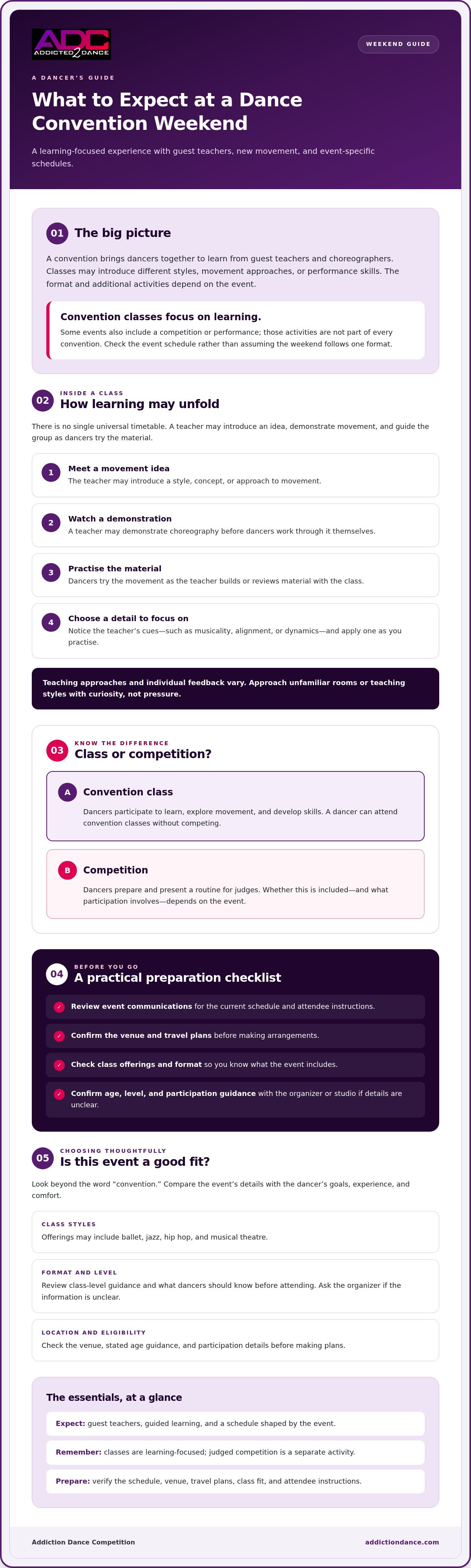
A first convention can feel like a lot to take in: unfamiliar teachers, new class formats, and a schedule that may be different from a regular studio day. One useful way to set expectations is to remember that a convention is centered on learning, even if an event also includes other activities.
A dance convention brings dancers together to learn from guest teachers and choreographers. Classes may introduce different styles, movement approaches, or performance skills. The schedule, class format, and additional activities depend on the event. For a general overview, large dance conventions commonly offer classes across multiple styles and levels to support dancer growth in the context of a weekend event.
A convention is learning-focused; a competition centers on presenting routines for judging. Some events combine convention classes with a competition or other activities, so read the schedule instead of assuming the weekend follows one format.
How a convention weekend differs from a competition
In a convention class, dancers participate to learn, explore movement, and develop skills. A teacher may introduce choreography and guide dancers as they practise it. A competition, by contrast, involves preparing and performing a routine for judges. Dancers can attend convention classes without competing, but event formats differ. Check whether a particular weekend includes a judged performance and what participation involves.
Who attends a dance convention?
Dancers are at the center of the experience. Parents and studio supporters may also attend to help with planning and logistics. Whether a class is a good fit depends on the event’s guidance and the dancer’s experience, comfort, and goals, not just on the word “convention.” Before registering, check the stated age and level information, class offerings, and participation details with the organizer or studio.
Addiction Dance Competition hosts conventions and elite masterclasses featuring industry-respected teachers and choreographers in a positive, family-friendly environment. If you’re considering an event, confirm its schedule, location, classes, and eligibility details before making plans.
What Happens in Convention Classes and Masterclasses?
Classes are often the heart of a convention. Dancers move through the sessions listed for that event rather than following one universal timetable. A teacher may introduce a style or movement idea, demonstrate choreography, and guide the group as dancers try the material. The pace and format vary, so review the schedule and attendee guidance in advance. If a new room or teaching style feels unfamiliar, approach each session with curiosity rather than pressure.
Depending on the event, styles may include ballet, jazz, hip hop, and musical theatre. A masterclass is typically a focused session led by a guest teacher, while regular studio classes are part of a continuing training schedule. For broader context on convention formats and class offerings, Dance Teacher’s guide can help dancers plan the year ahead.
Learning movement from guest teachers
A teacher may demonstrate movement before dancers work through it themselves. They may build or review the material as the class progresses. Watch closely and focus on the cues the teacher emphasizes, such as musicality, alignment, or dynamics. Rather than expecting to master every detail straight away, choose a detail to apply as you practise. Teaching approaches and individual feedback vary, so don’t assume every class will follow the same format.
Managing different styles and class levels
Use the event’s stated class-level guidance when choosing sessions. Trying a less familiar style can be a way to explore new movement, but it doesn’t guarantee a particular placement or experience level. If the schedule doesn’t explain what dancers should know before attending, ask the organizer. That check can help a dancer choose thoughtfully and arrive ready to learn.
Addiction Dance hosts conventions and elite masterclasses featuring industry-respected teachers and choreographers in a positive, family-friendly environment. You can explore Addiction Dance conventions as one option, then confirm the specific event’s class offerings and participation details before making plans.
Convention Classes, Feedback, and Competition: What’s Different?
Attending a convention doesn’t automatically mean a dancer is competing. A convention class is a place to learn and explore movement; a competition involves presenting a prepared routine for judging. Some events offer both, while others focus on classes. Check the event details to see what’s included.
Dancers don’t have to be advanced to benefit from a convention. The right fit depends on class guidance and a dancer’s experience, not simply on whether they’ve competed before. Learning unfamiliar movement, listening closely, and reflecting on feedback can all be valuable parts of the experience.
| What to compare | Convention class | Competition |
|---|---|---|
| Main goal | Learn, explore, and develop skills. | Present a prepared routine for judging. |
| Participation | Take part in class and work on the material taught. | Perform choreography prepared for the event. |
| Judged performance | Not inherent to class participation. | Judging is part of the performance format. |
How to use feedback without feeling discouraged
Feedback is information to consider, not a verdict on a dancer’s potential. A teacher’s cue may offer a useful detail to practise, such as sharper musical timing or clearer movement quality. After class, choose one or two practical takeaways to remember and revisit over time. Not every event or class includes individual critiques, so general instruction can be valuable too.
Scholarships and special recognition
Some events may offer scholarships or special awards, but opportunities and criteria vary. Check confirmed eligibility and participation requirements before making plans. Don’t assume an award is part of every convention or available to every attendee. For more context, see Unlocking Artistic Potential: The 2026-2027 Guide to Dance Competition Scholarships.
Keeping the learning goal in view can make the weekend feel more welcoming, whether or not competition or recognition is part of the event. To understand what to expect at a dance convention weekend, review the specific event information and distinguish class participation from any judged performance or award opportunities.
How to Prepare for a Dance Convention Weekend
Planning ahead can make a busy event more manageable. Start with the information organizers have confirmed, then build your travel and packing plans around it. Schedules and instructions vary, so use this checklist as a guide, not a substitute for event-specific details.
What to check before you leave
- Review event communications. Look for the latest schedule, registration information, class details, and attendee instructions. Note any updates from organizers.
- Confirm the venue and arrival details. Check the event location and where attendees should go when they arrive, using the organizer’s information.
- Plan your travel. Arrange transportation to the venue and allow time to find your way once you arrive. If travelling with a studio or family, make sure everyone understands the plan.
- Pack for the confirmed classes. Bring comfortable dancewear and appropriate footwear for the listed styles. Water and personal essentials may also be useful. Follow event-specific packing and participation instructions rather than assuming every venue has the same guidance.
- Clarify anything uncertain. If registration, class participation, or attendee instructions aren’t clear, ask the organizers before you travel.
How to pace yourself during a full event
Convention days can feel full, so keep your schedule and essentials easy to access. Build in breaks when the event timetable allows, and follow venue guidance about meals and hydration. A water bottle may be useful if permitted, but check event instructions first.
Set a simple learning intention for the day, such as noticing musicality or trying a style that’s new to you. Avoid measuring progress against everyone else in the room. Focus on listening, participating, and taking away ideas that feel useful for your own training. That’s a practical way to approach what to expect at a dance convention weekend.
With the details in place, there’s more room to focus on the classes. If you’re exploring event options, Explore Addiction Dance events and review the confirmed schedule, location, and attendee information for the event you’re considering.
Choosing a Dance Convention Weekend That Fits Your Goals
The right event supports what a dancer hopes to learn, not simply the one with the fullest schedule. Start with a clear goal, such as developing confidence, exploring a new style, or learning from guest teachers. Then compare the event’s format, location, classes, and stated experience guidance with that goal. A nearby event may simplify travel; another location may appeal if its confirmed classes better match a dancer’s interests.
For dancers and families in Chicago, Akron, Omaha, Richmond, Las Vegas, Minneapolis, Miami, Houston, Grand Rapids, Memphis, Detroit, Bloomington, Philadelphia, Pittsburgh, Boston, Nashville, St. Louis, Davenport, Milwaukee, and Birmingham, check the event listings for current location and schedule details. Don’t assume that every market or event offers the same classes or activities.
Details matter. Conventions don’t all offer the same styles, levels, age groups, or additional activities. Use official event information to understand what’s planned and who the sessions are intended for before registering.
Questions to ask before registering
- Which styles, levels, and age groups are identified? Check the schedule and eligibility guidance, then ask the organizer if the information doesn’t address your dancer’s experience.
- What are the registration and venue details? Confirm current registration instructions, the event location, and attendee information through official communications.
- Does the event include competition activities? Find out whether the schedule combines convention classes with judged performances or focuses on classes. Don’t assume competition is required for convention participation.
- Does the event format suit your plans? Consider travel arrangements, available class styles, and whether the confirmed activities align with the dancer’s goals.
Turn the weekend into a learning experience
Before attending, invite the dancer to choose one personal focus. It might be listening more closely to musicality, moving with greater confidence, or being open to trying a less familiar style. A simple intention gives the weekend direction without turning every class into a test of performance.
After a session, note a correction, cue, or movement idea that feels useful. The dancer can revisit it with their teacher later, connecting the convention experience to ongoing training. For another perspective on approaching these events, see Elite Mastery: Navigating the Dance Competition and Convention Circuit in 2027.
Addiction Dance hosts conventions and elite masterclasses featuring industry-respected teachers and choreographers in a positive, family-friendly environment. Consider them as you compare events, and check each event’s confirmed class offerings, schedule, location, and eligibility. For details, Explore Addiction Dance convention events.
Step Into Your Next Dance Experience with Confidence
Knowing what to expect at a dance convention weekend can turn first-time uncertainty into thoughtful preparation. The experience centers on learning: dancers explore movement, develop technique, and discover new ways to express themselves. Competition may be part of some events, but attending classes doesn’t automatically mean entering a judged performance.
Choose an event that fits the dancer’s goals, experience, and interests, then confirm its schedule, class guidance, location, and participation details. Addiction Dance hosts conventions and elite masterclasses with industry-respected teachers and choreographers in a positive, family-friendly environment. Some events may offer scholarships or special awards, so check the details for each event rather than assuming they’re included.
When you’re ready to compare options, Explore Addiction Dance convention events. Review the confirmed event information, set a learning goal, and arrive ready to make the most of each class.
Frequently Asked Questions
What happens at a dance convention weekend?
A dance convention weekend typically centers on classes led by guest teachers or choreographers. If you’re wondering what to expect at a dance convention weekend, picture an active learning environment where dancers explore movement and develop their skills. Depending on the event, the schedule may also include registration activities, performances, competitions, or scholarship opportunities. Formats vary, so check the official schedule for confirmed classes, timing, and activities before making plans.
What should I wear to a dance convention?
Choose comfortable dancewear and footwear suited to the styles listed in the event information. Check whether the schedule includes ballet, jazz, hip hop, or another style, then pack shoes appropriate for those classes. You may also want a change of clothing and personal essentials. Dress codes and venue requirements can differ, so review organizer instructions and ask the event team if anything is unclear before you travel.
Do you have to be an advanced dancer to attend a convention?
No, not necessarily. A convention’s suitability depends on its stated age and class-level guidance, along with the dancer’s experience and goals. Review the event information to see which classes may be appropriate, and contact the organizer if placement expectations aren’t clear. A dancer doesn’t need to approach every class as a test. Curiosity and focus can help them take part in a way that feels comfortable and learn from the experience.
How is a dance convention different from a dance competition?
A convention focuses on learning through classes with teachers or choreographers, while a competition centers on performing routines for adjudication. Some events combine both formats, but convention participation doesn’t automatically mean a dancer is competing. Check the schedule to learn whether judged performances are included, who can participate, and what activities are planned. That distinction helps dancers and families understand the weekend before registering or arranging travel.
Can dancers receive scholarships at a dance convention?
Some dance events may offer scholarships or special recognition, but opportunities and criteria vary. A scholarship isn’t guaranteed, and attendance alone shouldn’t be taken as assurance of an award. Check the event’s published information for eligibility and participation details, then ask the organizer about anything that remains unclear. Classes can still offer valuable opportunities to develop technique and artistry, whether or not scholarships or special awards are part of the event.
How should I prepare for my first dance convention weekend?
Start by reviewing the event schedule and attendee instructions, then confirm the venue and travel arrangements. Pack comfortable dancewear, suitable footwear, water, and personal essentials while following event-specific guidance. If class levels or packing instructions aren’t clear, contact the organizer before you leave. Choosing one learning goal, such as listening for musicality or trying an unfamiliar style, can help a first-time dancer feel focused and ready.
Are dance convention schedules the same at every event?
No, schedules vary by event, including class styles, teachers, timing, and additional activities. Some conventions may take place alongside competitions, while others focus on classes. Use official event information to confirm the venue, schedule, registration, and participation details. If you’re considering an Addiction Dance event in Chicago, Akron, Omaha, or another listed market, check its specific details rather than assuming every location offers the same experience.


