
The most prestigious competition isn’t always the best fit for a small studio. The best dance competitions for small studios challenge dancers, offer useful feedback, and suit the team’s goals and capacity without leaving families and staff stretched thin.
It’s understandable to wonder whether a smaller team will feel outmatched at a large event. Look beyond the stage size and compare the judging approach, learning opportunities, and schedule and travel demands. Judging isn’t standardized across competitions, so review the criteria and the kind of feedback dancers receive rather than relying on reputation alone.
This guide offers a practical framework for comparing competition formats, learning opportunities, event scale, and logistics. You can use it to build a shortlist around your studio’s priorities and resources, including whether a competition paired with conventions or masterclasses would bring performance and learning together. For studios considering Addiction Dance Competition, compare the 2027 National Tour with your team’s location and travel capacity, and consider Nationals Branson 2027 as another confirmed option. The goal is a supportive, professionally run experience that helps dancers at different stages grow with confidence.
Key Takeaways
- Choose among the best dance competitions for small studios by weighing fit, dancer experience, and studio capacity, not prestige alone.
- Compare event formats, judging approach, learning opportunities, travel demands, and audience access before narrowing your options.
- Consider regional events for nearby participation, national tours for broader opportunities, and competition-plus-convention formats for performance and learning.
- Build a shortlist by defining your goals, assessing resources, and checking official event information for current dates, locations, registration, and requirements.
- Evaluate Addiction Dance Competition’s 2027 National Tour and Nationals Branson 2027 against your studio’s location, goals, and readiness.
What makes the best dance competitions for small studios a strong fit?
A smaller studio doesn’t need to choose an event for prestige alone. It needs clear information, a welcoming experience, and a format that supports the dancers it has. “Small studio” can describe many different programs. It doesn’t automatically mean fewer dancers, a limited budget, or less competition experience, so start with your actual circumstances rather than assumptions.
A competition is a strong fit when its format, judging, learning opportunities, and logistics align with the studio’s goals, available capacity, dancers’ needs, and families’ ability to travel. Competitive dance encompasses varied styles and event structures, as outlined in Competitive dance. That variety makes a deliberate comparison more useful than choosing by reputation alone.
Which goals should a small studio set before comparing events?
First, decide what a successful experience would look like. Is the priority performing onstage, receiving constructive adjudication, accessing education, pursuing recognition, or combining several of these? A studio-wide goal might be to give a team performance experience, while an individual dancer or family may value feedback, learning, or remote viewing when that option is available.
Discuss these priorities with staff, dancers, and families before building a shortlist. The conversation can reveal where goals overlap and where flexibility matters. It also helps directors distinguish the studio’s central objective from preferences that may differ among dancers and families.
Why can a smaller studio benefit from the right event environment?
Organization shapes the experience before a dancer steps onstage. Clear schedules, accessible event information, and a considerate atmosphere can help staff and families plan with greater confidence. Ask how the event communicates updates and what the day’s structure involves. Don’t assume that a large or small event will automatically be easier to manage.
Professional judging can give dancers and teachers an informed perspective on performance. The value lies in feedback they can use to reflect and set goals, not in a promised score or result. Look into the judging approach and what adjudication includes, then consider whether it matches the dancers’ experience and the studio’s aims.
The best dance competitions for small studios don’t follow one universal pathway. One program may prioritize a nearby performance opportunity; another may want a national event or a competition paired with learning. Compare the demands alongside the opportunities, then choose an environment that lets dancers participate with purpose and your studio prepare responsibly.
How to compare dance competition formats, judging, and learning opportunities
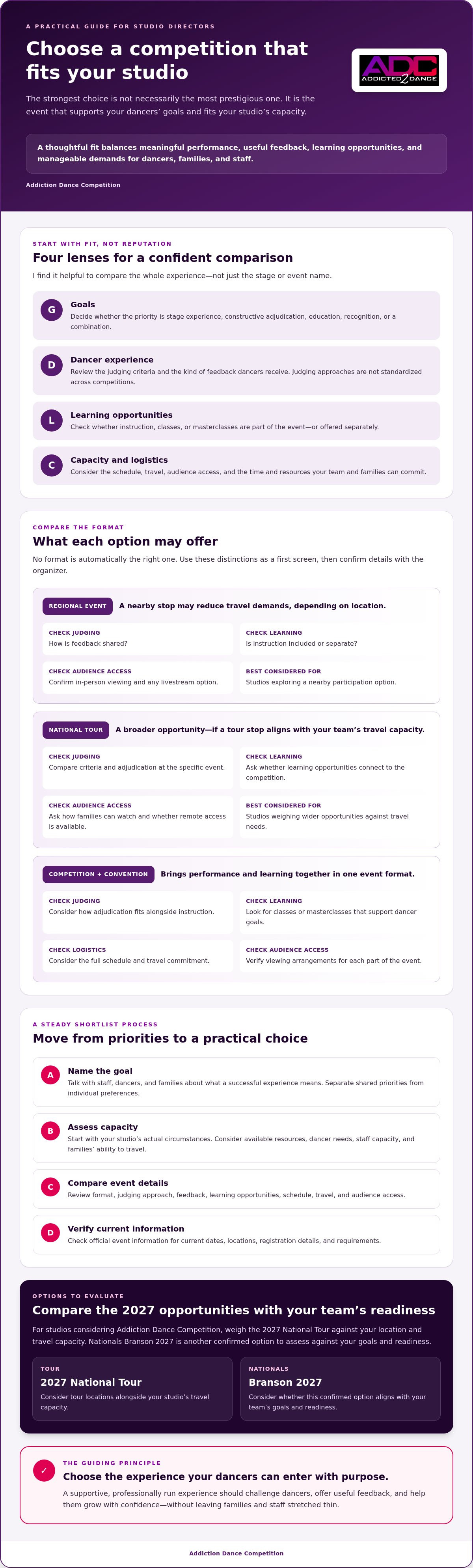
Compare the experience behind each format, not just its name or scale. The best dance competitions for small studios depend on the balance your dancers need between performing, receiving feedback, learning, and managing travel. Use this table as a first-pass screen, then confirm each detail with the event organizer.
| Format | Judging | Learning | Travel | Audience access |
|---|---|---|---|---|
| Regional event | Review the judging approach and how feedback is shared. | Check whether instruction is included or offered separately. | A nearby stop may reduce travel demands, depending on location. | Confirm in-person viewing arrangements and whether livestream access is offered. |
| National tour | Compare criteria and adjudication details at the specific event. | Check for learning opportunities connected to the competition. | Assess the tour’s current city stops against your studio’s travel capacity. | Ask how families can watch, including whether remote access is available. |
| Competition-plus-convention | Consider how performance adjudication fits with the event’s instruction. | Look for classes or masterclasses that support dancers’ learning goals. | Consider the full schedule and travel commitment, not only the performance. | Verify audience access for each part of the event. |
No format is automatically the right one. A regional event may suit a studio seeking a more local performance opportunity, while a national tour may be worth evaluating if its location aligns with the team’s travel capacity. A combined competition and convention can bring performance and instruction together, but only if dancers and families can manage both.
What should directors look for in judging and performance categories?
Ask whether judging is professionally delivered, what criteria are used, and how dancers receive feedback. Confirm that the event’s categories match the studio’s intended entries. Addiction Dance Competition, for example, lists solo, duo/trio, and group categories. For a deeper look at adjudication, consult a Professional Judged Dance Competition: The Ultimate Guide to Adjudication. The National Dance Education Organization standards can also provide educational context when considering how an event’s learning approach aligns with your studio’s values.
Do conventions and masterclasses add value for a smaller studio?
They can, especially when instruction is a priority alongside stage experience. Compare the competition opportunities with the teaching available from instructors and choreographers, then consider whether the schedule works for your dancers. Scholarships may be available at some events, but they’re an opportunity, not a promised outcome. The guide Elite Mastery: Navigating the Dance Competition and Convention Circuit in 2027 offers another lens for evaluating this combination.
Before committing, verify current dates, fees, schedules, eligibility, categories, and city stops directly with organizers. If you’re weighing a tour format, you can also review Addiction Dance Competition’s event options against your studio’s priorities.
Best-fit dance competition options for small studios: formats to consider
Rather than rank competitions by size or reputation, compare formats by what they ask of your studio and what they offer its dancers. The best dance competitions for small studios meet your goals without creating a mismatch with your team’s readiness, season plan, or travel capacity.
Regional competitions: a practical option for nearby performance
A regional event may suit a studio looking to keep travel manageable while giving dancers a focused performance opportunity. Consider the actual distance, dancer readiness, family schedules, and how the event fits around the rest of your season. “Regional” doesn’t automatically mean nearby, so check the organizer’s current cities and dates before deciding. Don’t assume an event will stop in your area based on past schedules or a general list of locations.
Addiction Dance Competition hosts regional events across the United States, making its current schedule one option to investigate. Confirm the specific location, dates, registration details, and event requirements with the organizer before building plans around a potential stop.
National tours: broader exposure, with travel to assess
A national tour may appeal to studios seeking a broader event experience, provided the travel commitment works for dancers, families, and staff. Review the currently listed city stops and dates, then compare the travel involved with what your studio hopes to gain. Addiction Dance Competition’s 2027 National Tour is an option to assess. The guide The Ultimate Stage: Your 2027 National Tour Guide can be a useful companion as you explore the tour, but verify current details directly before making decisions.
Competition and convention: performance paired with learning
If your dancers would benefit from instruction as well as stage time, consider an event format that brings competition and convention opportunities together. Addiction Dance Competition offers conventions and elite masterclasses alongside its competition programming. Check the event information to confirm which learning opportunities are available at a specific event, whether they suit your dancers’ goals, and how the schedule and travel demands fit your studio.
Where does Addiction Dance Competition fit?
Addiction Dance Competition’s documented offerings include regional and national competitions, professional judging, and production. Alongside the 2027 National Tour, Nationals Branson 2027 is a confirmed offering to evaluate against your priorities. Neither option is automatically the right fit for every studio. Compare each one using the same practical questions: Does the location work? Does the format match your goals? Can your dancers and families take part comfortably? Confirm current dates, locations, categories, registration, and requirements with the organizer before shortlisting an event.
How can a small studio shortlist competitions with confidence?
A clear process keeps the shortlist grounded in what your studio can support, rather than what looks impressive on a schedule. Work through these steps with staff and families before committing:
- Define your goals. Decide whether the priority is performance experience, adjudication, education, recognition, or a mix.
- Assess capacity. Consider dancer readiness, staff time, rehearsal planning, travel resources, and family availability.
- Compare formats. Weigh regional events, national tours, and competition-plus-convention options against those goals and resources.
- Verify logistics. Use official event information to confirm current dates, locations, registration steps, categories, eligibility, fees, schedules, and other participation requirements.
- Discuss the fit. Review the shortlist with dancers, staff, and families. Resolve concerns before making a decision.
This process helps identify the best dance competitions for small studios based on practical fit, not assumptions about what a smaller program should choose.
What logistics should directors verify before registering?
Check event details directly with the organizer. Confirm the current location and dates, how registration works, which categories are available, and what requirements apply to your intended entries. Then map the commitment against travel time, staffing, rehearsals, and family schedules. If remote viewing matters to families or supporters, check whether livestream access is available and review its current details rather than assuming it’s included.
Discuss travel and scheduling with families early. Their input can help you spot conflicts before they affect participation or studio planning.
How can a studio match an event to dancer readiness?
Look beyond age or experience labels. Consider each dancer’s confidence, performance experience, learning goals, and comfort with the format. A suitable event should offer a meaningful challenge without making awards or advancement the only definition of success. Note any unanswered questions about expectations, categories, or the schedule, and ask the organizer before deciding.
Reusable shortlist checklist
- Does the event support the studio’s main goals?
- Are the format and categories appropriate for the intended entries?
- Can dancers, staff, and families manage the travel and schedule?
- Are current dates, location, registration, and requirements confirmed?
- Are judging, learning, and audience-access details clear?
- Have unresolved questions been answered by the organizer?
Once you’ve compared your priorities with the practical details, assess whether Addiction Dance Competition’s offerings belong on your shortlist. Explore Addiction Dance Competition and verify current event information before planning participation.
Choose a competition partner that supports your studio’s next step
Your final choice should reflect the whole experience, not one standout feature. Consider whether the event format matches your goals, judging and categories suit your dancers, learning opportunities matter to your program, and location and schedule fit your capacity. Readiness matters, too. A competition should offer an appropriate next challenge without making awards or prestige the only measure of success.
What can studios evaluate in Addiction Dance Competition’s offerings?
Addiction Dance Competition hosts regional and national events across the United States. Its confirmed offerings include the 2027 National Tour and Nationals Branson 2027. Compare each with your location and travel capacity, then verify current event details directly rather than assuming a particular city, date, or schedule.
The organization lists professional judging and solo, duo/trio, and group categories. Consider whether the judging approach and available categories align with your performance goals and planned entries. Its conventions and elite masterclasses may also be relevant if instruction is one of your studio’s priorities. Livestream access is another point to assess if families or supporters need a remote viewing option. Confirm the details for the specific event you’re considering.
What should a studio do before moving forward?
Bring the options back to your decision criteria. Does the event support your dancers’ experience and learning goals? Can staff plan rehearsals and travel around the current schedule? Do families understand the participation commitment? These questions help turn an appealing possibility into a practical choice.
Before deciding, verify the current schedule, location, registration process, categories, eligibility, fees, and participation information with the organizer. If a detail is unclear, ask before making plans. Event information can change, and confirming specifics helps your studio and families move forward with confidence.
The best dance competitions for small studios aren’t universal winners. They’re the events that support the studio’s next step while respecting its dancers, goals, and resources. If Addiction Dance Competition’s offerings appear aligned with your criteria, you can explore Addiction Dance Competition and find an event to consider.
Choose the event that moves your studio forward
The best dance competitions for small studios aren’t defined by prestige alone. They’re the events whose format, judging, learning opportunities, location, and demands make sense for your dancers and your studio’s capacity. A thoughtful shortlist helps balance meaningful performance experience with the practical needs of families and staff.
Addiction Dance Competition offers regional and national competitions across the United States, with professional judging and production. Its conventions, elite masterclasses, and livestream access may also be worth considering as you compare performance, learning, and audience needs. Check current event information carefully, then weigh those details against your goals before deciding.
If its offerings seem aligned with your studio’s next step, explore Addiction Dance Competition and find an event to consider. The right choice is one that helps your dancers take on a purposeful challenge with confidence. Your studio can move forward thoughtfully, together.
Frequently Asked Questions
What should a small dance studio look for in a competition?
Look for a competition that matches your dancers’ goals and readiness, as well as the studio’s practical capacity. Compare event format, judging approach, available categories, learning opportunities, travel needs, schedule, and audience access. Then verify current dates, locations, registration details, and participation requirements with the organizer. A useful choice isn’t defined by prestige alone. It’s one your dancers can approach with purpose and your staff and families can support comfortably.
Are national dance competitions a good fit for small studios?
They can be, if the event’s goals and travel demands make sense for your studio. A national competition may offer a broader event experience, but its scale alone doesn’t determine whether it’s suitable. Review the current location, schedule, categories, judging information, and participation requirements. Then consider dancer readiness, staffing, rehearsal planning, and family availability. Compare those demands with what your studio hopes dancers will gain before deciding.
Can a small studio compete in regional and national dance events?
Potentially, yes, but eligibility and participation details depend on the organizer and event. Check the current requirements and categories rather than assuming that studio size determines access. Addiction Dance Competition lists solo, duo/trio, and group categories, alongside regional and national competitions. Confirm which categories are available for the event you’re considering, and ask the organizer about any requirements that aren’t clear before planning entries.
How much does it cost for a small studio to attend a dance competition?
There isn’t one reliable total to apply across competitions, since costs depend on the organizer’s current fees and your studio’s plans. Request an itemized estimate directly, and ask what registration covers and whether other participation expenses apply. Include travel, lodging, meals, staffing, and rehearsal planning in your budget review. Confirm all current fees and deadlines with the organizer before families make financial commitments.
What is the difference between a dance competition and a dance convention?
A dance competition centers on presenting performances for adjudication, while a dance convention focuses on instruction through classes or other learning opportunities. Some events combine both, giving dancers a chance to perform and learn in one event experience. Addiction Dance Competition offers competitions, conventions, and elite masterclasses. Check the specific event information to see which opportunities are included and whether the format suits your dancers’ goals.
How can a studio choose a competition that supports dancer confidence?
Choose an event that offers an appropriate challenge for the dancers’ experience, confidence, and learning goals. Review the judging approach and ask what kind of feedback dancers can expect, without treating scores or awards as guaranteed outcomes. Discuss the format with dancers and families, too. Confidence can grow through preparation, thoughtful feedback, and a positive performance experience, not only through recognition or advancement.
Does Addiction Dance Competition offer events for small studios?
Addiction Dance Competition offers regional and national events across the United States, but its offerings shouldn’t be taken as a guarantee of a specific small-studio division or event stop. Its confirmed options include the 2027 National Tour and Nationals Branson 2027, with professional judging and solo, duo/trio, and group categories. Studios in Chicago, Akron, Omaha, Richmond, Las Vegas, Minneapolis, Miami, Houston, Grand Rapids, Memphis, Detroit, Bloomington, Philadelphia, Pittsburgh, Boston, Nashville, St. Louis, Davenport, Milwaukee, or Birmingham should verify current locations and requirements with the organizer.
Can families watch a dance competition remotely?
Sometimes, depending on the event. Addiction Dance Competition offers livestream access so families and supporters can watch remotely, but confirm current availability and viewing details for the specific competition. If remote access matters to your families, check whether it covers the event they plan to attend and how viewers can access it. Don’t assume every event has the same livestream arrangements.


