

Post-competition recovery for dancers starts with a few thoughtful choices that fit how your body feels. After a full day of performances, you may be tired, sore, hungry, and facing a long trip home. Conflicting advice about stretching, ice, and recovery tools can make the next step feel less clear, not more.
It’s understandable to want one routine that tells you exactly what to do. As a woman writing about dance and recovery, I encourage you to approach the hours after competing with care, not pressure. Recovery can look different after a single performance than after a long event with multiple dances, waits, and irregular meals. A calm plan leaves room to adjust instead of asking you to push through or follow every new tip.
This guide offers practical steps for the hours after competing and the days that follow, with options to adapt to your energy, schedule, and travel. We’ll consider gentle cool-downs, food and fluids, rest, soreness, and when it’s wise to seek professional advice. There’s no one-size-fits-all fix, just a thoughtful place to begin.
Key Takeaways
- Build post-competition recovery for dancers around a flexible sequence: settle after performing, meet basic needs, rest, then reassess.
- Choose stretching, ice, or recovery tools for comfort when they suit you. None is required after every performance.
- Adapt your routine to a late finish, travel, or multiple performances instead of forcing an ideal schedule.
- Use how you feel the next day to guide your return to training, and seek professional advice if soreness or other symptoms concern you.
- Notice which simple recovery habits feel supportive so you can carry them into your next competition journey.
Why Post-Competition Recovery for Dancers Starts When the Last Routine Ends
The final pose may bring applause, relief, or a rush of excitement, but it doesn’t always make the next step obvious. After a competition, a dancer can feel energized one moment and ready to collapse the next. If you’re unsure whether to stretch, rest, eat, or simply get home, you’re not doing recovery wrong. The shift from performance mode to ordinary activity can take a little attention.
Post-competition recovery is a flexible set of habits that helps a dancer settle after performing, meet basic needs, and ease back toward usual activity. It isn’t one perfect stretch, a particular tool, or a treatment. Start modestly: notice how you feel, choose what’s manageable, and avoid turning recovery into another performance to get right.
That flexibility matters because competition days rarely follow the rhythm of a class. A dancer might perform more than once, wait between routines, stay at the venue for much of the day, and travel afterward. Repeated preparation and performance can make the day feel very different from a familiar class, even when the dancer feels focused and excited. Performance nerves and the emotional high of being onstage can also make it harder to notice tiredness until the event ends.
What makes competition recovery different from an ordinary class day?
A usual class has a familiar beginning and end. An event may ask a dancer to switch between waiting, warming up, performing, and waiting again. Add a drive home or a late finish, and the practical needs after the final routine may differ from those after class. Some dancers feel lively at first, then notice fatigue later. That change alone doesn’t diagnose a problem.
Soreness varies from dancer to dancer and event to event. Feeling sore doesn’t prove that you’ve injured yourself, and feeling little soreness doesn’t measure how well you performed. Treat it as information about how you feel, not a score for your effort. Pay attention to what’s comfortable and whether anything feels unusual or concerning, rather than comparing your recovery with another dancer’s.
What does a realistic recovery routine need to accomplish?
A realistic routine supports comfort, basic needs, and a gradual return to normal activity. It can be simple: change out of performance gear when practical, have something to eat and drink if needed, and make room for rest. Gentle movement may feel pleasant for one dancer; another may prefer to sit quietly or head home. Neither choice needs to become a rule for everyone.
Age, schedule, dance style, travel, and individual response all shape what feels workable. A younger dancer may rely on a parent or caregiver for food, transport, and settling in. Someone with a late finish may need a shorter routine that fits the journey home. Across the season, notice which habits feel comfortable and easy to repeat. Recovery can support your transition after competition, but it can’t promise a particular feeling or outcome by a set time.
How a Dancer’s Recovery Unfolds After a Competition
Think of the hours after your final routine as a sequence, not a strict timetable. First, finish performing and give yourself a moment to settle. Then check what you need, make the journey home as comfortable as possible, and leave room for rest. The next day, reassess before deciding how much of your usual activity feels right. This is a practical shape for post-competition recovery for dancers, whether the event ends early or stretches into a late finish.
What can dancers do before leaving the venue?
After the final performance, there’s no need to rush into a recovery routine. If it’s comfortable and practical, change into relaxed layers and take a moment to come down from the event. Easy walking or gentle mobility may feel pleasant, but it’s optional. Skip it if you’re tired, uncomfortable, or need to focus on getting ready for the trip home.
- Pause and check in. Notice whether you’re hungry, thirsty, cold, or ready to sit quietly.
- Choose familiar food and fluids. If you have access to a snack or meal that suits your usual routine, it can be a straightforward option after a long event day. There’s no need to force a particular food or amount.
- Make travel easier. Gather your belongings at an unhurried pace and choose a comfortable position for the journey where possible.
These are flexible choices, not boxes every dancer must tick. An event schedule, appetite, age, and travel plans can all affect what’s workable. For broader context on how recovery approaches vary, the Gatorade Sports Science Institute reviews Athlete Recovery Techniques, including active recovery, stretching, and nutrition.
How can dancers make the evening and next morning easier?
Once you’re home, keep the wind-down realistic. A shower, comfortable clothes, a familiar meal, or a few quiet minutes may help mark the shift from event mode to evening. Travel, family plans, and a late finish can change the order. The aim isn’t to complete an ideal ritual; it’s to make room for sleep and rest without adding pressure to an already full day.
In the morning, check in before deciding what comes next. Notice whether ordinary movement feels comfortable and whether you feel ready for your planned activity. A gentle return to daily routines may suit one dancer, while another may prefer more rest before training. Don’t treat a calendar entry as a command to go straight back to intense work. If something feels concerning, pause rather than pushing through.
Quick reminder: Finish, settle, meet your immediate needs, rest, then reassess the next day. Let your own schedule and response guide each step.
As you plan future performances, Addiction Dance Competition events offer regional and national competition opportunities as part of the next chapter in your dance journey.
Stretching, Ice, and Recovery Tools: What Helps After a Dance Competition?
Recovery options aren’t interchangeable. A short walk may help you transition out of performance mode; a familiar stretch may feel pleasant; ice or a massage tool may be someone’s comfort preference. None is required after every competition. For post-competition recovery for dancers, choose based on how you feel and what’s comfortable, rather than using a tool because you believe you must.
It also helps to separate immediate comfort from longer-term training. A roller or massage device might feel soothing to one dancer, but it doesn’t repair an injury, prevent one, or replace the gradual work involved in developing dance skills and physical capacity. Recovery tools are optional extras, not shortcuts or proof that you’re taking better care of your body.
When might gentle movement or stretching feel appropriate?
Light movement can be an easy way to shift from repeated routines and waiting into the rest of your day. If it feels good, you might walk comfortably or move your joints through familiar, relaxed ranges. Stretching can also be part of a dancer’s usual routine, but after a competition it doesn’t need to become a flexibility test. Keep it gentle and familiar. Don’t force a deeper range just because your body is warm or other dancers are stretching.
Let comfort guide you. If movement brings on sharp, worsening, or unusual pain, stop and reassess instead of stretching through it. A recovery routine shouldn’t require you to prove anything. Sometimes the most appropriate choice is simply to sit down, change into comfortable clothes, or head home.
Are ice, foam rollers, or massage tools necessary?
No single tool belongs on every dancer’s checklist. Ice may appeal as a comfort measure, while a foam roller or massage tool may suit someone who already enjoys using one. Rest is another valid option, and it doesn’t require equipment. These choices have different purposes and can feel different from person to person; none is a universal answer to soreness after performing.
- Ice: An optional comfort choice, not a compulsory response to every ache.
- Foam rollers: Use only if the pressure feels comfortable. There’s no need to roll intensely or continue over a painful area.
- Massage tools: Treat them as a preference, not a way to force muscles to relax or correct a suspected injury.
- Rest: A practical choice when you’re tired or don’t want more movement after a full event day.
If a tool causes pain, discomfort, or concern, stop using it. Avoid adding unfamiliar techniques simply because they’re popular or available backstage. Your own response matters more than having the fullest collection of recovery gear. A calm, comfortable choice is enough; you don’t need to do everything.
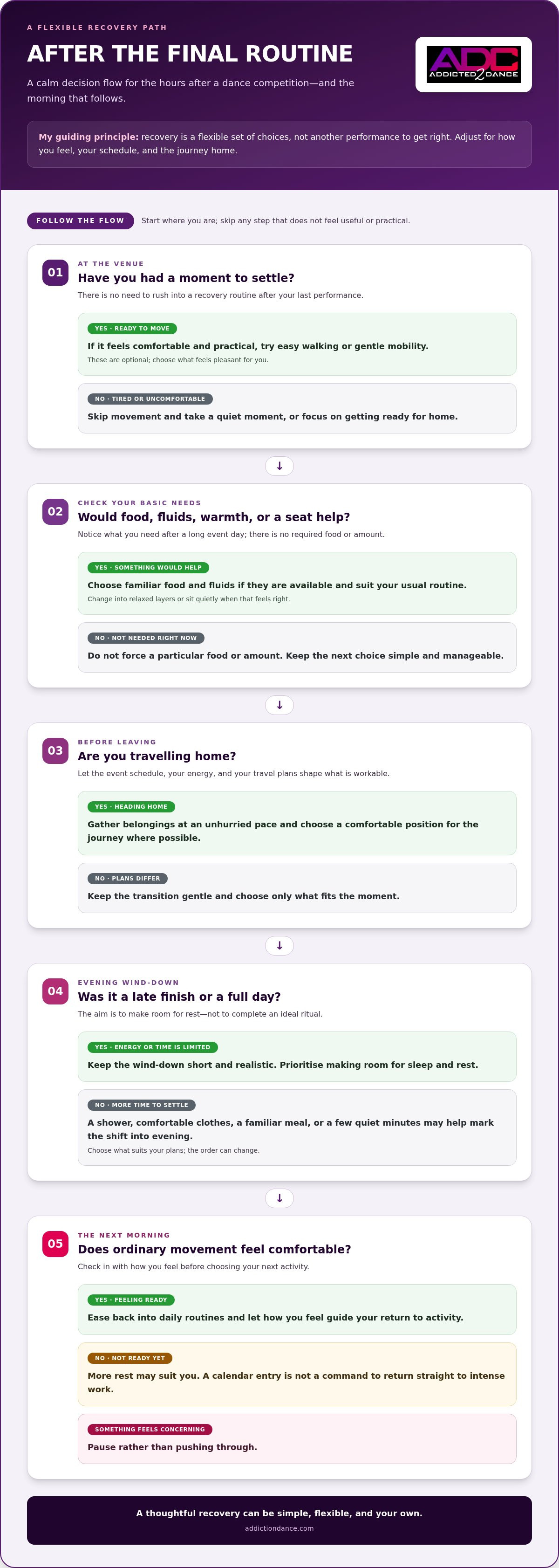
A Practical Post-Competition Recovery Checklist for Dancers
Use this checklist as a flexible guide, not a test to pass. A dancer finishing several performances, waiting through a long event day, or traveling home may need a different plan from someone with an early finish. Choose the steps that fit the moment and leave anything that doesn’t feel useful. For post-competition recovery for dancers, comfort and readiness matter more than completing every item in order.
- After the final routine: Pause before rushing into the next task. Change into comfortable clothing when practical, and check what would help you feel settled.
- Before leaving: If you’re hungry or thirsty, have familiar food and fluids when available. Keep the choice simple and in line with your usual needs.
- During a long event or trip: Make room to sit comfortably or move gently if that feels appropriate. You don’t need to add a workout after performing.
- Once you’re home: Keep the evening calm where possible. Make space for a meal, quiet rest, and sleep in whatever order suits the schedule.
- The next day: Check how you feel before deciding whether to return to training. Resume ordinary movement or dance activity according to comfort and readiness, not a fixed deadline.
How should dancers adapt recovery during travel or a long event day?
Planning a few familiar snacks and access to water can make a packed schedule easier to manage, especially if performances and waits disrupt usual meal routines. Comfortable layers can help with the transition from costume to travel clothes. If the day runs late, focus on the basics you can manage rather than trying to recreate a perfect routine in a car, hotel, or crowded venue.
Several performances may leave little space between event demands. Use available breaks to sit, settle, or take an easy walk if it feels comfortable. Keep any plan adaptable: if food options are limited or travel changes the evening, choose the most practical next step and let the rest wait.
When is it time to pause and seek professional guidance?
Ordinary tiredness after a full event day can feel different from pain that is severe, worsening, persistent, or otherwise concerning. Don’t try to diagnose it yourself. Stop an activity that brings on concerning symptoms, and seek qualified medical guidance if you’re worried about an injury or symptoms aren’t improving. A dancer who is a minor should tell a trusted adult so they can help decide what to do next.
Returning to training is a decision, not a deadline. If normal movement feels comfortable, that may help inform your next step; if it doesn’t, pause and get appropriate guidance rather than pushing through. For active performers interested in holistic approaches to physical recovery, resources like the Quantum Resonant Healing Center offer insights into specialized care models for high performers. A checklist can support good judgment, but it can’t replace individual assessment when something feels wrong.
When planning another event, consider the schedule, travel, and number of performances alongside your recovery routine. Those practical details can help you prepare for the day without expecting every competition to follow the same pattern.
Make Recovery Part of the Next Dance Competition Journey
A competition ends, but the season keeps moving. The most useful recovery routine isn’t necessarily elaborate or identical each time. It’s a small set of choices you can learn from, adapt, and carry into the next event. I encourage dancers to treat those choices as personal information, not a new standard to meet. What felt manageable after one competition may need adjusting after a different schedule or a more demanding day.
How can dancers build a routine that lasts beyond one event?
After you’ve had time to rest, jot down a few brief observations: how your energy felt, what helped you get comfortable, and which parts of the evening were realistic. You might note that changing into soft layers was easy, but a planned walk didn’t suit a late finish. Keep the note neutral. Recovery isn’t a performance score, and another dancer’s routine isn’t a measure of what yours should look like.
Revisit the routine as your needs and event plans change. A short event close to home may call for a different approach than a busy schedule with multiple performances or a longer trip. For dancers planning ahead, the 2027 National Tour Guide can help put upcoming competition events in context, while the dance competition and convention circuit guide offers a broader look at busy event schedules.
What should dancers carry forward to the next competition?
Keep the useful details practical. Remember familiar foods that travel well for you, comfortable clothing for after performing, and a realistic plan for getting home and resting. If several routines or long waits are ahead, think about where a simple snack or a quiet pause might fit. These small preparations can make it easier to respond to the day as it unfolds, without expecting every event to follow the same script.
Pay attention to concerns, too. If discomfort or another symptom persists or worries you, share what you’ve noticed with a trusted adult and seek guidance from a qualified medical professional. For dancers who are minors, bringing a parent, caregiver, or another trusted adult into the conversation can help make the next step clearer.
Preparation, performance, and rest all belong in a dance season. So does learning what feels supportive for you. Let your post-competition recovery routine stay flexible: keep what’s comfortable, reconsider what isn’t, and adjust as your schedule changes. There’s no need to turn it into another routine to perfect.
For dancers planning their season in Chicago, Akron, Omaha, Richmond, Las Vegas, Minneapolis, Miami, Houston, Grand Rapids, Memphis, Detroit, Bloomington, Philadelphia, Pittsburgh, Boston, Nashville, St. Louis, Davenport, Milwaukee, and Birmingham, event dates and travel plans are part of the same preparation. Keep your recovery plan simple enough to adapt around them.
Carry Your Care Into the Next Performance
Your next step doesn’t need to be a perfect plan. Let your experience guide you: keep the recovery habits that felt comfortable, adjust what didn’t fit, and give yourself permission to respond differently after a different kind of event. That steady, flexible approach is at the heart of post-competition recovery for dancers. It makes room for ambition and care to sit side by side throughout a season of preparation, performance, and rest.
Every performance is one part of a longer journey. Keep listening to yourself, keep learning what supports you, and step into what comes next with confidence.
Frequently Asked Questions
Can dancers stretch immediately after a competition?
Yes, gentle, familiar stretching may feel comfortable for some dancers, but it isn’t mandatory or a guaranteed way to prevent soreness. Choose movements you already know, keep the range easy, and avoid bouncing or trying to increase flexibility after performing. If discomfort increases, stop rather than pushing through. A dancer who feels unsure can skip stretching and choose a quiet transition instead.
Should a dancer take a rest day after a competition?
A rest day may suit you, but there’s no fixed rule for every dancer. Consider the demands of the event, travel, fatigue, and how you feel once you’re home. Easy everyday movement, such as walking around the house, may feel comfortable, while training may not. Return gradually rather than testing your limits, and seek qualified medical guidance if pain or other symptoms concern you.
What should dancers eat after a competition?
Choose a familiar, satisfying meal or snack that fits your needs and what’s available after the event. For example, if a late finish makes a full meal impractical, a familiar snack may be easier before traveling home. Drink fluids in a way that suits your usual routine. There’s no single food that guarantees faster recovery. For individual nutrition concerns, especially for a young dancer, speak with a qualified healthcare or nutrition professional.
Are ice baths necessary for dance competition recovery?
No, an ice bath isn’t a required part of every dancer’s recovery routine. Dancers may prefer different comfort measures, including simply resting, and cold exposure shouldn’t be treated as a guarantee of faster recovery or injury prevention. There’s no universal approach that suits everyone. If an ice bath causes distress, discomfort, or concerning symptoms, stop. If you have a health concern or are unsure whether cold exposure is appropriate, seek qualified medical advice.
How can dancers recover when they have to travel home after competing?
Keep the plan simple: wear comfortable clothes, bring familiar food if practical, and have fluids available for the trip. Whether you’re traveling home from an event in Chicago or elsewhere, take an opportunity to sit comfortably or move gently only if it feels suitable for you and the journey. Travel can disrupt familiar routines, so a perfect schedule isn’t necessary. Pay attention to symptoms that persist or worsen.
Is soreness after a dance competition normal?
A dancer may notice tiredness or muscle soreness after demanding activity, but soreness alone can’t tell you whether there’s an injury or confirm that everything is fine. Notice whether the discomfort changes, and avoid movements that make the pain worse. Don’t use soreness as a measure of how well you performed. Seek guidance from a qualified medical professional for symptoms that are severe, persistent, unusual, or worsening.
When can a dancer return to training after a competition?
There’s no single return time that fits every dancer or event. Consider how you feel, what the next session involves, and whether any symptoms are concerning. If you do return, ease into the session rather than using it to test your limits right away. Persistent pain, injury concerns, or unusual symptoms deserve guidance from a qualified healthcare professional before you resume demanding activity.


