

What if competition-season motivation came from more than the thrill of taking the stage? As a woman who values both artistic growth and the wellbeing behind a performance, I believe the answer to how to keep dancers motivated for competition season isn’t simply asking them to work harder. It’s helping them connect each rehearsal to a goal that matters, especially when the first rush of excitement fades and routines begin to feel familiar.
It’s natural for dancers to notice scores, placements, or how they compare with teammates. But those aren’t the only signs of growth. More consistent technique, greater confidence, and a more expressive performance all count. Competition can be a meaningful milestone without becoming the sole measure of a dancer’s progress.
A practical approach starts with personal goals, makes progress visible, and gives dancers supportive routines for challenging weeks and competition days. Fresh learning through conventions and masterclasses can also renew artistic energy. The aim is a season where dancers feel engaged, supported, and ready to step onstage with confidence.
Key Takeaways
- Build motivation around purpose, progress, and connection, not the expectation that dancers feel excited every day.
- Choose personal goals dancers can influence, make progress easy to notice, and revisit those goals as the season unfolds.
- Use specific recognition and meaningful choices to encourage dancers without making scores or placements the only measure of success.
- When motivation dips, name what feels difficult, take one manageable step, and reach out for support when needed.
- Discover how to keep dancers motivated for competition season by treating events as meaningful milestones and using conventions and masterclasses to renew artistic inspiration.
Why does dancer motivation change during competition season?
Competition season has a rhythm of its own. Early excitement can give way to long rehearsal weeks, familiar corrections, and the pressure of an approaching performance. I see that shift as a normal part of a demanding season. A dancer doesn’t need to feel thrilled at every rehearsal to remain committed or keep growing.
Sustainable motivation comes from purpose, progress, and connection, not constant excitement. Internal motivation is the personal meaning a dancer finds in learning and performing; outside pressure is the push to act for approval, rewards, or results. Both can influence a dancer, but a season anchored only to outside results may be harder to sustain. The foundational ideas behind motivation in psychology help explain why personal interest and external incentives can affect effort in different ways.
Repetition can feel unrewarding when dancers don’t notice what’s improving. Nerves may turn a correction into evidence of failure, while comparison can draw attention to a teammate’s strengths instead of personal development. School demands, family schedules, and physical tiredness can also narrow focus and patience. These pressures may overlap, so a change in enthusiasm isn’t automatically a sign of weak commitment. Recognizing that is a useful first step in how to keep dancers motivated for competition season.
What can cause a competition-season motivation slump?
Repeatedly practicing the same transitions or musical sections can feel flat if progress stays invisible. A dancer may be more secure with timing or more consistent in a difficult passage without realizing it. Fear of making a mistake can also lead to withdrawal: she may mark choreography, avoid asking questions, or stop taking artistic risks. A demanding school week or a tired body can further reduce focus, even when the dancer still cares deeply.
What does healthy motivation look like in a dancer?
Look for engagement, not nonstop excitement. A motivated dancer might work carefully through a correction, ask how to make a movement clearer, or show curiosity about the choreography. Her reasons may be rooted in artistry, teamwork, or the satisfaction of mastering a challenging skill. Those motives differ from dancer to dancer and may shift during the season.
Notice patterns with care. One quiet rehearsal, a missed detail, or a frustrated moment doesn’t tell the whole story. A supportive teacher or parent can observe without labeling, then gently ask what feels difficult and what still feels rewarding. The answer may point to a need for clearer feedback, a chance to see progress, reassurance about mistakes, or time to recover after a full day. Dancers feel better understood when they’re treated as individuals, not judged by one performance or one difficult week.
How can dancers set goals that sustain motivation all season?
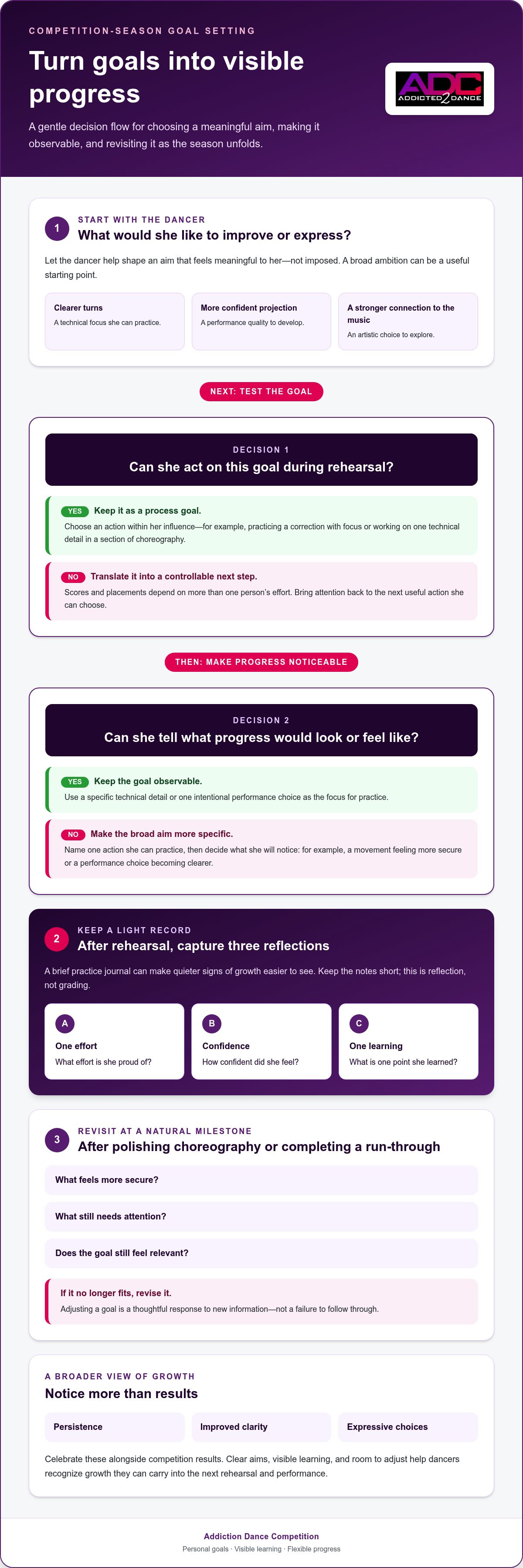
A useful competition-season goal gives each rehearsal direction without making every practice feel like a test. Encourage dancers to choose aims they own, can act on, and can revisit as their needs change. The process is straightforward: choose a personal aim, make it observable, then check in and adjust.
Start by asking what the dancer wants to improve or express. The answer might be clearer turns, more confident projection, or a stronger connection to the music. Turn that broad ambition into an action she can practice, such as focusing on a specific technical detail during a section of choreography or making one intentional performance choice. Let the dancer help shape the goal. Ownership makes an aim feel meaningful rather than imposed.
How should a dancer choose a meaningful competition-season goal?
Balance outcome goals, such as performing with greater clarity, with process goals that are within the dancer’s influence. A score or placement depends on more than one person’s effort; practicing a correction with focus is a choice the dancer can make. Process goals protect motivation by keeping attention on the next useful action, even when results are uncertain. If judges’ feedback points to an area for growth, use this professional dance competition judging guide to think about turning observations into a learning goal.
How can dancers track progress without focusing only on scores?
A brief practice journal can make quiet progress easier to see. After rehearsal, the dancer can note one effort she’s proud of, how confident she felt, and one point she learned. Keep the notes short. The purpose is reflection, not grading every session.
Review the notes at natural milestones, such as after polishing a section of choreography or completing a run-through. Ask what feels more secure, what still needs attention, and whether the goal remains relevant. If it no longer fits, revise it. Adjusting a goal is a thoughtful response to new information, not a failure to follow through.
Celebrate persistence, improved clarity, and expressive choices alongside competition results. Those signs help a dancer recognize growth she can carry into the next rehearsal and performance. This is a practical foundation for how to keep dancers motivated for competition season: clear aims, visible learning, and enough flexibility to keep moving forward. For dancers who find inspiration in a live competition milestone, Addiction Dance Competition events can be part of a wider season of learning and performance.
How can teachers keep dancers motivated without adding pressure?
Motivation rarely grows from pressure alone, and constant praise isn’t a substitute for useful feedback. A demanding rehearsal can focus effort when expectations are clear and the challenge feels manageable. But if a dancer begins to fear mistakes, disappoint a teacher, or let her team down, pressure can chip away at confidence. Keep the standard high and the communication calm: explain what needs attention, why it matters, and what the dancer can try next.
A score or placement describes one competition result. It doesn’t define a dancer’s talent, character, or potential. Teachers can reinforce that distinction in their responses to strong performances and difficult ones alike. Invite questions, listen without rushing to correct every feeling, and give dancers appropriate choices, such as deciding which artistic detail to refine first. That involvement can help dancers feel invested in their own progress.
Does competition pressure motivate dancers or increase stress?
A little anticipation may sharpen focus, but fear-based pressure can make dancers hesitant to take creative risks. Set expectations that are specific and achievable, then make room for honest questions. Instead of “Don’t mess up,” try “Keep your focus through the transition, and return to the music if a step goes off.” The feedback stays purposeful without making a mistake feel like a personal failure.
How can teachers and families offer encouragement that feels supportive?
Recognize the action, not just the outcome. “You stayed present after missing that entrance” or “You helped your group reset with patience” tells a dancer exactly what she did well. Ask what kind of support helps her feel heard and capable. Some dancers want a practical reminder before they perform; others need a quiet moment to settle in.
After a performance, families can begin with the dancer’s experience: “What part felt most like you?” or “What did you enjoy?” That opens space for reflection before discussing judges’ feedback or results. Recognition has more meaning when it’s genuine and specific. Praise that feels automatic can lose its impact, while rewards tied only to winning may narrow attention to outcomes.
Rehearsal can also feel fresh without losing its purpose. Return to the music and explore how a phrase might be expressed through dynamics, focus, or intention. A brief creative variation or a new way to approach a section can renew attention while keeping the choreography’s goals clear. Supportive coaching is a practical part of how to keep dancers motivated for competition season, alongside steady expectations and care for their overall wellbeing.
A positive event environment can extend that encouragement beyond rehearsal. Addiction Dance Competition events feature professional judging and a family-friendly atmosphere, offering another supportive setting in a dancer’s season. Explore Addiction Dance Competition events as a performance milestone.
What should dancers do when motivation drops before a competition?
A dip in motivation close to competition can feel alarming, but it doesn’t mean the season has gone off course. Nerves, fatigue, and the wish to perform well can all make the final stretch feel heavier. Rather than demanding instant enthusiasm, help the dancer find a steady next step.
Try a short reset: name what feels difficult, choose one manageable action, and seek support if needed. “I’m worried about the opening” is easier to work with than “I’m not ready.” The next action might be asking for feedback on that section or marking one transition in the next rehearsal. Then reconnect with a personal reason for dancing, whether that’s expressing a story, sharing the stage with teammates, or enjoying the feeling of movement.
What can a dancer do after a difficult rehearsal?
Pause before letting one challenging practice stand in for the whole season. Identify the specific moment that felt difficult and ask a teacher for focused feedback. Choose one realistic action to try next rehearsal instead of trying to fix everything at once. This turns frustration into useful information and keeps the next step within reach.
Some pre-performance nerves are part of caring about the moment. But if worry feels overwhelming, continues to build, or involves pressure the dancer doesn’t know how to handle, encourage a private conversation with a trusted adult, such as a parent or teacher. Listening calmly is more helpful than dismissing the concern or trying to diagnose it.
How can a team prepare for competition week with confidence?
Reduce avoidable uncertainty by reviewing practical plans early, including the team’s schedule, what dancers need to bring, and where they should gather. Agree on a familiar warm-up and a simple encouragement routine that suits the group. Consistency gives dancers a clear path through a busy event day.
In the final stretch, keep the focus on connection, expression, and actions dancers can control. A quiet reminder to listen for the music or stay present with the group can be more useful than another warning about mistakes. Prioritize rest and reasonable preparation; competition week doesn’t need to become a last-minute test of worth.
Planning around an event milestone can make the final weeks feel more concrete. The 2027 National Tour offers an example of how a competition can serve as a point on the season calendar, not the only measure of growth. That perspective is central to how to keep dancers motivated for competition season: support the person as well as the performance.
For a meaningful next performance milestone, explore Addiction Dance Competition events.
How can competitions and conventions refresh dancers’ motivation?
A competition gives dancers a clear moment to work toward, and sharing that experience with teammates can bring fresh energy to the season. Still, the event is a milestone, not a final verdict on progress. A dancer may leave proud of a performance choice, a stronger connection with her group, or the confidence to take the stage, regardless of placement.
Conventions and elite masterclasses refresh learning in a different way. New teaching perspectives and choreography invite dancers to approach movement with fresh curiosity. A class that challenges a dancer to explore musicality or dynamics can spark ideas she carries back into rehearsal. These experiences support both performance and artistic development.
How can a competition become a learning milestone, not just a result?
Before the event, invite each dancer to choose one experience-based goal. She might focus on staying connected to the music, committing to a performance choice, or supporting her group with positive energy. Afterward, reflect on the experience: What felt strong? How did teamwork shape the performance? What lesson could she carry into the next rehearsal?
Professional judging adds another perspective. Feedback can help identify an area to explore, but it isn’t a complete measure of a dancer’s potential. Read comments as information to reflect on with care, then decide which observation offers a useful next step. For more context on learning through events, see this dance competition and convention circuit guide.
How can dancers carry motivation from one event to the next?
Keep the reflection simple: name one success, one lesson, and one next step. A success could be staying present under pressure; a lesson might be to make a transition clearer; the next step could be asking a teacher for focused feedback. This turns an event into part of an ongoing season, rather than a single result to celebrate or dwell on.
Masterclasses offer another bridge forward. Dancers can notice a new idea, style, or approach to movement, then bring that curiosity into future performances. Addiction Dance Competition hosts regional and national competitions, conventions, and elite masterclasses in a positive, family-friendly atmosphere. These shared experiences can support dancers as they continue learning and performing.
For dancers and families planning meaningful season milestones, explore Addiction Dance Competition events. Competition and learning experiences can be part of how to keep dancers motivated for competition season, while each dancer’s growth remains the deeper measure.
Carry Your Progress Into the Next Performance
A strong competition season isn’t defined by constant excitement or a single result. Dancers stay engaged when they have personal goals, can recognize growth in their technique and artistry, and feel supported through challenging weeks. Teachers and families can help with thoughtful feedback, recognition of effort, and a balanced perspective on performance scores.
Competitions can be powerful milestones, especially when dancers focus on what they’re learning and sharing onstage. Addiction Dance hosts regional and national competitions with solo, duo/trio, and group categories, alongside conventions and elite masterclasses led by industry-respected teachers and choreographers. Professional judging and a positive, family-friendly atmosphere make each event part of a broader season of learning and connection.
Ready to choose a meaningful next milestone? Explore Addiction Dance events and find your next season milestone. With clear goals and steady encouragement, dancers can keep growing, find fresh inspiration, and step onstage with confidence.
Frequently Asked Questions
How do you keep dancers motivated during competition season?
Keep motivation connected to personal goals, visible progress, and supportive relationships. Help each dancer choose a skill or performance quality to develop, then notice specific steps forward during rehearsals. Vary practice with musical exploration or creative challenges while keeping the routine’s purpose clear. Competitions can give dancers an exciting milestone, but growth in confidence, technique, and teamwork matters too. A dancer doesn’t need to feel excited every day to stay engaged.
What should a dance teacher do when a dancer loses motivation?
Start with a calm conversation rather than assuming the dancer is lazy or no longer committed. Ask what feels difficult, listen, and help identify one manageable next action, such as focusing on a transition or seeking feedback on a specific phrase. Recognize effort and curiosity, not only polished results. If the concern seems bigger than a rehearsal slump, invite the dancer to speak privately with a trusted adult and offer steady support.
How can dancers stay motivated when they are not winning?
Shift attention to progress the dancer can influence. A placement is one event outcome, not a complete measure of potential or season-long growth. After performing, reflect on one success, one lesson, and one next step. For example, a dancer might celebrate staying connected to the music, learn from a judge’s comment about clarity, and choose a section to refine. That reflection helps turn competition into experience she can carry forward.
Do rewards help keep dancers motivated?
Rewards can mark an achievement, but they work best when they don’t become the only reason to dance. If praise or prizes focus solely on winning, dancers may feel that effort matters only when it produces a title. Pair celebration with specific recognition: name the dancer’s preparation, persistence, courage, or teamwork. This helps her connect the achievement to actions she can repeat and appreciate learning, artistry, and shared effort alongside results.
How can parents support a dancer during competition season?
Offer encouragement that helps your dancer feel heard, not evaluated. After a performance, ask how it felt before discussing scores, corrections, or placement. Praise something specific, such as staying composed after a mistake or supporting a teammate. Families in Chicago, Akron, Omaha, Richmond, Las Vegas, Minneapolis, Miami, Houston, Grand Rapids, Memphis, Detroit, Bloomington, Philadelphia, Pittsburgh, Boston, Nashville, St. Louis, Davenport, Milwaukee, and Birmingham can use the same approach: keep the focus on the dancer’s experience and growth.
What can dancers do when they feel nervous before a competition?
Name the worry, choose one controllable action, and lean on a trusted person for support. A dancer who’s anxious about a section might ask for a focused reminder, follow the team’s familiar warm-up, and bring attention back to the music and performance choices she can control. Some nerves are a natural response to an important moment. If distress feels overwhelming or continues to build, encourage a private conversation with a trusted adult.
Can dance conventions help motivate competition dancers?
Yes. Conventions and elite masterclasses can introduce new teachers, choreography, and ways of thinking about technique and artistry. A dancer might leave with a fresh idea about musicality or a new performance challenge to explore in rehearsal. Treat the experience as an opportunity to learn and connect, not another test of worth. Addiction Dance Competition offers conventions and masterclasses with industry-respected teachers and choreographers as part of a season’s broader learning journey.


