
The biggest competition on the calendar isn’t always the best fit for your studio. When I consider how to choose the right dance competition for your studio, I start with the dancers in front of me: their goals, experience, confidence, and readiness to perform. A well-matched event offers a meaningful challenge while keeping growth and enjoyment at the center.
It’s worth weighing more than the stage experience. Regional events, national competitions, and conventions can serve different priorities. Dates, locations, travel, and participation categories also affect how well an opportunity fits your season. Rather than assuming one format suits everyone, consider what each group of dancers needs from the experience.
This guide offers a practical framework for comparing event formats, logistics, and educational value. Use it to align opportunities with your students’ needs and your studio’s goals, then explain your decision clearly to dancers and families.
Key Takeaways
- Start with what your studio wants dancers to gain, whether that’s performance experience, adjudication, recognition, or continued learning.
- Compare regional events, national events, and convention opportunities by purpose, using each event’s details to understand what it includes.
- Assess dancer readiness and the overall experience, not prestige alone, when deciding whether an event is a supportive fit.
- To decide how to choose the right dance competition for your studio, weigh event format alongside dates, locations, travel needs, and registration information.
- Compare Addiction Dance Competition’s regional and national events with your studio’s goals and logistics.
Start with your studio’s goals before choosing a dance competition
The right event isn’t necessarily the most prestigious one. It’s the one that suits your dancers and advances your studio’s priorities. Before comparing venues or awards, decide what students should take away: a chance to perform, professional adjudication, recognition, continued learning, or a thoughtful mix of these goals.
A good-fit competition aligns your studio’s priorities with dancers’ readiness and offers students a meaningful experience on and off the stage. That’s a more useful starting point than reputation alone. For a foundational overview of competitive dance styles and structure, Competitive dance offers helpful context. Your studio’s goals determine which event experience makes sense.
Which outcomes matter most to your dancers and studio?
Be specific about the experience you’re seeking. A studio focused on performance may prioritize opportunities to present polished choreography. If technical development is central, adjudication and time to reflect on feedback may matter more. Recognition can motivate some dancers, while convention classes or masterclasses can support a stronger learning focus.
Consider how students will participate. Would group entries build the ensemble experience you value? Are solo or duo/trio opportunities a priority for particular dancers, or is a mix the best fit? Match those choices to students’ ages, training experience, confidence, and readiness as a group. Family expectations matter, too. Explaining why you chose an event helps families understand its value beyond awards.
How do you assess readiness without making awards the only goal?
Consider what the performance setting asks of dancers: presenting choreography onstage, receiving professional judging, and managing the emotions that can come with performing in public. Readiness differs across a studio. One group may welcome a demanding challenge, while another may benefit from a supportive first experience that builds confidence.
Adjudication and stage time can create opportunities to learn, but no particular score, award, or personal breakthrough is guaranteed. Keep the focus on preparation, teamwork, artistic growth, and how students respond to the experience. A positive, family-friendly atmosphere suits studios that want dancers to feel encouraged as they take on new challenges.
To decide how to choose the right dance competition for your studio, weigh your intended outcomes against the dancers who will attend. Clear goals make it easier to evaluate event formats and explain your choice to students and families.
Compare dance competition formats, judging, and learning opportunities
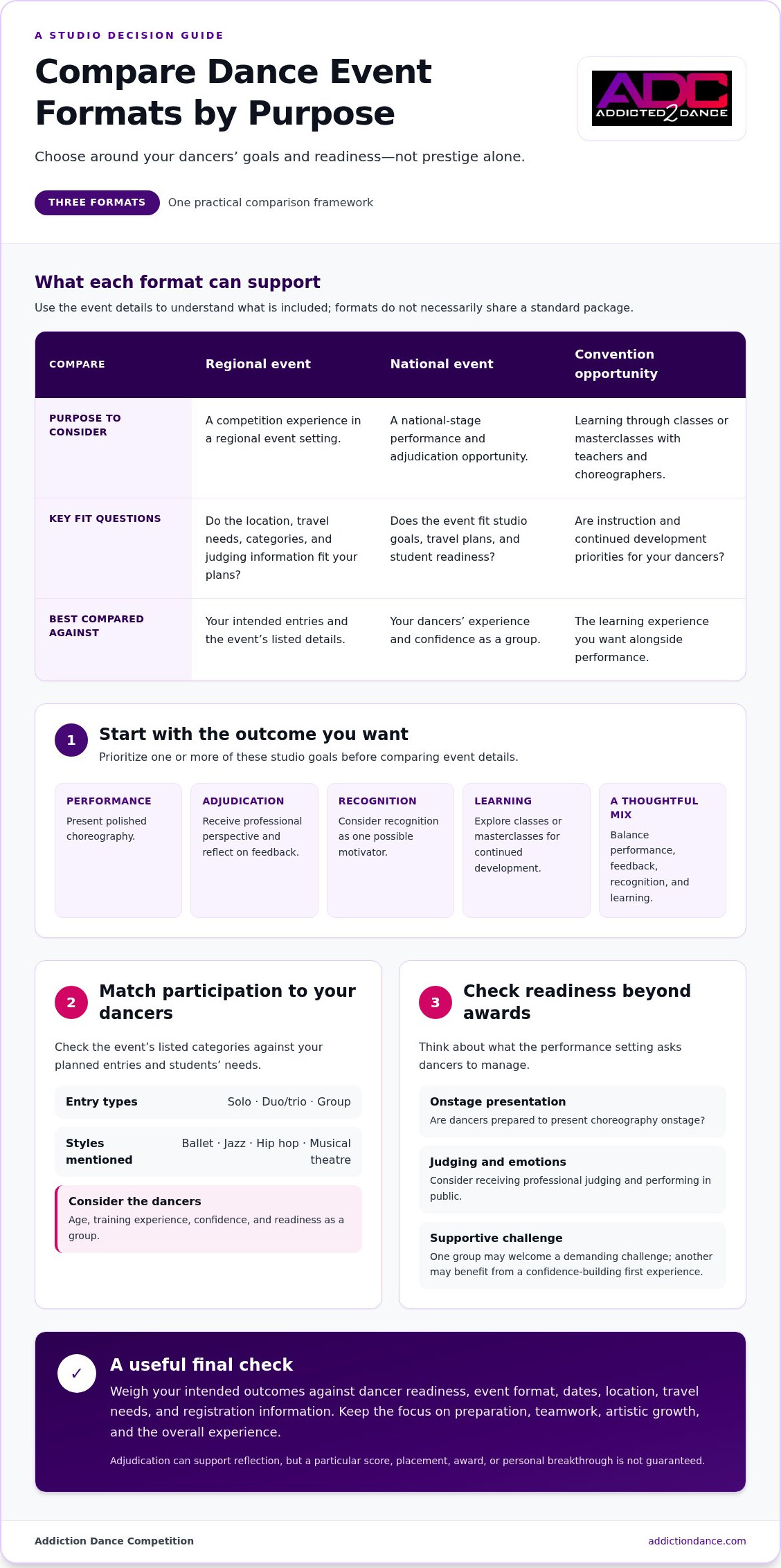
Once you know what your studio wants dancers to gain, compare event formats with those priorities. Regional events, national events, and conventions can serve different purposes, so look at what each event offers rather than relying on its label. For a broader look at how performance and convention experiences can intersect, explore the dance competition and convention circuit.
| Format | Purpose to consider | What to compare |
|---|---|---|
| Regional event | A competition experience in a regional event setting. | Location, travel needs, listed categories, and judging information. |
| National event | A national-stage performance and adjudication opportunity. | Fit with studio goals, travel plans, and student readiness. |
| Convention opportunity | Learning through classes or masterclasses with teachers and choreographers. | Whether instruction and continued development are priorities for your dancers. |
Use these as comparison points, not assumptions about a standard package. One event may focus on adjudicated performances, while another may also include classes or other learning opportunities. Review the event information to understand its format and plan entries accordingly.
What should a studio compare in event categories and judging?
Match the listed categories to the entries you plan to bring. Solo, duo/trio, and group participation each create a different performance context, and the available styles should suit your dancers’ repertoire. Addiction Dance Competition offers categories across styles such as ballet, jazz, hip hop, and musical theatre. For practical questions about event organization, judging, and genres, see Dance Teacher Magazine’s questions to ask before choosing a competition.
Professional judging gives dancers and studio leaders a considered perspective on a performance, but it can’t guarantee a particular placement or award. Treat adjudication as one part of the experience, and consider how your studio will use feedback for reflection and future training.
When does a convention or masterclass add value?
If performance is the central goal, prioritize the competition experience. If continued learning is also important, convention classes or elite masterclasses can add another dimension, giving dancers opportunities to learn from teachers and choreographers. Scholarships or special awards may also be part of an event, but they are possibilities rather than promised outcomes. Addiction Dance Competition hosts regional and national events, conventions, and elite masterclasses, giving studios formats to compare against their goals. Explore Addiction Dance Competition opportunities as part of your research.
Look beyond awards: test whether the competition suits your dancers
A prestigious name can be appealing, but it doesn’t tell you whether an event fits your studio. A competition should suit the dancers taking part, the experience you want them to have, and the priorities you’ve set for the season. As you consider how to choose the right dance competition for your studio, weigh the complete experience before focusing on titles or awards.
Assess event fit before awards: the right stage supports your dancers’ growth, not just your studio’s recognition. Recognition can be meaningful, but it’s only one possible outcome. Performance experience, considered adjudication, and opportunities to keep learning can also make an event valuable.
How should you weigh competition, education, and recognition?
Start with the season’s priorities. If dancers need more stage experience, focus on the performance opportunity and whether the planned entries suit their readiness. If learning is a major goal, consider whether convention classes or elite masterclasses complement their existing training. If recognition matters, keep it in perspective alongside preparation, artistic development, and enjoyment.
Scholarships, titles, and placements may be part of an event, but they aren’t predictable results. Treat them as possibilities, not the measure of success. Dance Teacher offers a useful framework of questions to ask before choosing a competition, including considerations around judging, genres, and awards.
How can one event serve dancers with different needs?
A studio may include students with varied experience, confidence, and performance goals. Map each planned entry to the dancers involved: a group routine may suit students who thrive through ensemble work, while a solo or duo/trio may better fit a dancer seeking an individual challenge. These are planning choices, not rankings of ability. Compare the event’s categories and styles with your students’ interests and current repertoire.
Then consider the atmosphere you want your community to experience. A positive, family-friendly environment can help dancers feel supported as they perform and learn. Livestream access gives families and supporters another way to follow the event. Look for an experience that respects the range of dancers in your studio, rather than expecting every student to benefit from the same kind of challenge.
A useful final test is simple: can you explain how this event serves the dancers attending, beyond the possibility of an award? Addiction Dance Competition brings regional and national events together with convention and elite masterclass opportunities. Explore competition and learning opportunities as you consider what best fits your studio community.
Use a practical checklist to compare schedules, travel, and participation
A strong event choice also has to work in real studio life. Rehearsal calendars, travel demands, dancer participation, and family communication all shape whether an opportunity feels manageable. Use a simple sequence to keep the decision grounded: set priorities, compare event information, map logistics, then explain the choice clearly.
- Set priorities: Identify which dancers and routines the studio hopes to include and what the experience should support.
- Compare event information: Review published dates, locations, categories, registration information, and participation requirements.
- Map logistics: Set the event against rehearsals, studio commitments, travel needs, staff capacity, and family plans.
- Communicate the choice: Share why you selected the event and the details families need to plan.
For tour planning, consider the 2027 National Tour alongside your studio calendar, travel needs, and participation plans.
What logistics belong on a studio comparison checklist?
Compare the event location and dates with the studio calendar before building the season around it. Consider how travel may affect rehearsals, dancer participation, staff availability, and family schedules. Review the event information and participation requirements so your planned entries align with what’s offered. If livestream access matters to families or supporters, include it in your planning and communication instead of leaving it until the last minute.
How do you present the choice to dancers and families?
Explain how the selected event connects to studio priorities and the needs of the participating dancers. Share dates, location, travel expectations, and entry plans in clear language. If some details are still being organized, distinguish them from confirmed information rather than guessing. Make room for family questions and individual considerations, while keeping expectations realistic: the event offers an experience, not a guaranteed score, award, or result.
Planning is part of how to choose the right dance competition for your studio. A clear process helps dancers and families understand both the opportunity and the practical commitment. To compare a tour option with your schedule and travel needs, view Addiction Dance Competition opportunities.
Choose an event experience that supports your studio’s next step
Bring the decision back to five essentials: dancer fit, studio goals, event format, logistics, and learning value. A strong choice should make sense across all five, not just look impressive on a calendar. Use that test to compare regional and national events, then decide which experience best supports the dancers you plan to bring.
How can regional and national events fit different studio plans?
Regional and national events are distinct options, not a simple ranking from lesser to better. A regional event may align with a studio’s travel plans and desired performance experience; a national event may suit a studio seeking a national-stage opportunity. The right comparison depends on your priorities, students, and the event’s details. Addiction Dance Competition hosts regional and national events, with professional judging and participation categories across multiple dance styles.
For additional context on the tour experience, explore the 2027 National Tour. If continued learning is part of your studio’s next step, consider how conventions or elite masterclasses might complement the performance experience. Livestream access can also help families and supporters follow an event.
What should a studio do after selecting a competition?
Once the event feels aligned, bring dancers, families, and staff into the plan. Explain why it suits the studio’s priorities and the participating dancers. Then organize the practical details: planned entries, rehearsal preparation, travel, and how essential updates will be shared. Clear communication helps everyone understand both the opportunity and the commitments involved.
Before finalizing your studio’s participation plan, make one last check:
- Dancer fit: Are the event and planned entries appropriate for the students taking part?
- Studio goals: Does the experience support the outcomes you set for the season?
- Format and learning: Do the event’s competition or convention opportunities suit those priorities?
- Logistics: Can the dates, location, and participation plans work for your studio community?
This dancer-first process gives you a grounded way to decide how to choose the right dance competition for your studio and a clear rationale to share with your community. When you’re ready to consider upcoming events, explore Addiction Dance Competition.
Choose a competition experience that moves your studio forward
The right event brings your studio’s goals and dancers’ needs together. Keep the decision grounded in fit, learning value, and practical logistics, rather than prestige or awards alone. That’s the heart of how to choose the right dance competition for your studio: choose an experience your dancers can approach with confidence and your community can support.
Addiction Dance Competition hosts regional and national events across the United States, with professional judging and production. Studios can also take part in conventions and elite masterclasses, and families and supporters can use livestream access to watch performances. These opportunities support different performance, learning, and family priorities, so compare the event details with your studio’s next step.
Explore Addiction Dance Competition event opportunities and find experiences that align with your studio’s plans. With clear priorities and thoughtful preparation, you can help your dancers take the stage ready to grow, perform, and enjoy the experience.
Frequently Asked Questions
How do I choose the right dance competition for my studio?
Choose an event by matching its experience to your studio’s goals, your dancers’ readiness, and your practical needs. Decide whether performance, professional adjudication, recognition, or continued learning matters most this season. Then compare the event’s categories, styles, dates, location, and participation information. When considering how to choose the right dance competition for your studio, use dancer fit and learning value as your guide, rather than treating prestige or awards as the deciding factors.
What should a dance studio look for in a competition?
Look for an event whose participation categories, dance styles, judging, and overall atmosphere suit your dancers and studio priorities. Check whether solo, duo/trio, or group entries fit your plans, and review the event information for dates, location, and participation details. Consider whether educational opportunities or livestream access matter to your community. A well-matched event should make sense for the students attending, not just look impressive on a calendar.
Are regional or national dance competitions better for a studio?
Neither format is automatically better; the right option depends on your studio’s goals, dancers, and travel plans. A regional event may fit the season’s schedule or travel needs, while a national event offers a different performance setting. Compare the specific event information, categories, and learning opportunities rather than relying on the label alone. Addiction Dance Competition hosts regional and national events across the United States for studios to consider.
How do I know if my dancers are ready for a competition?
Assess readiness by considering whether dancers can perform their planned choreography in a public setting and engage constructively with adjudication. Readiness can vary by age, experience, confidence, and entry type, so consider students individually as well as by group. Talk through what participation involves and keep expectations centered on preparation, teamwork, and learning. Stage experience and feedback can be valuable, but no particular score, award, or personal outcome is assured.
Can a dance competition also offer educational opportunities?
Yes, some competition experiences also include educational opportunities, though components vary by event. Conventions and elite masterclasses can complement performance by giving dancers opportunities to learn from teachers and choreographers. Consider whether that instruction supports your students’ learning goals and fits the studio’s plans. Addiction Dance Competition hosts conventions and elite masterclasses alongside its event offerings. Scholarships and special awards may also be available as opportunities, but they shouldn’t be treated as guaranteed outcomes.
What should a studio compare before choosing a dance competition?
Compare event goals and format, categories and styles, judging information, dates and location, travel needs, participation details, and learning opportunities. Also map the event against rehearsals, staff capacity, family plans, and how updates will be shared. Studios in Chicago, Akron, Omaha, Richmond, Las Vegas, Minneapolis, Miami, Houston, Grand Rapids, Memphis, Detroit, Bloomington, Philadelphia, Pittsburgh, Boston, Nashville, St. Louis, Davenport, Milwaukee, and Birmingham should weigh travel against each event’s location and dates.
Do dance competitions offer livestream access for families?
Some competitions offer livestream access, but it isn’t a feature to assume across every event. Addiction Dance Competition offers livestream access so families and supporters can watch performances remotely. If livestream viewing matters to your studio community, include it in your event comparison and share the relevant information with families as part of your communication plan. It can help supporters follow dancers’ performances when they can’t attend in person, while the live event remains a distinct experience.


