
When I think about what makes a dance competition Milwaukee families will value, location is only one part of the decision. The experience around each performance matters too: professional adjudication, meaningful learning opportunities, clear event information, and an atmosphere where dancers feel supported.
It’s natural to feel unsure when comparing regional events. You want to know what dancers can expect, how judging fits into the experience, and what to prepare before registration. Looking beyond the stage and schedule can help you find an event that suits your dancer or studio.
Addiction Dance Competition brings together regional and national competitions and conventions, with professional judging and solo, duo/trio, and group categories across styles such as ballet, jazz, hip hop, and musical theatre. Educational opportunities, elite masterclasses, special awards, and livestream access can add further value for dancers and families.
In this guide, I’ll share what to look for in a Milwaukee competition, what Addiction Dance Competition offers participants, and how to approach event details, registration, and preparation with confidence. Addiction’s competition circuit also serves dancers in Chicago, Akron, Omaha, Richmond, Las Vegas, Minneapolis, Miami, Houston, Grand Rapids, Memphis, Detroit, Bloomington, Philadelphia, Pittsburgh, Boston, Nashville, St. Louis, Davenport, Milwaukee, and Birmingham.
Key Takeaways
- Choose a dance competition Milwaukee dancers can grow from by looking beyond location to the full event experience.
- Compare event format, performance categories, judging, learning opportunities, and viewing access before registration.
- Use the event listing to guide entry coordination and plan around published details such as schedules, deadlines, and check-in instructions.
- Prepare in a clear sequence: review event information, coordinate entries, rehearse routines, and plan attendance.
- Consider how competition and convention opportunities can support a dancer’s development beyond the performance itself.
What to look for in a Milwaukee dance competition
Dancers and families need more than a date on a calendar. A regional competition is an organized opportunity to perform, receive adjudication, and celebrate progress in front of an audience. It can also bring studios together around a shared goal: presenting carefully prepared work and giving dancers a focused moment onstage.
Competition formats and experiences vary, so look beyond location when comparing a dance competition Milwaukee dancers might attend. Start with these practical questions:
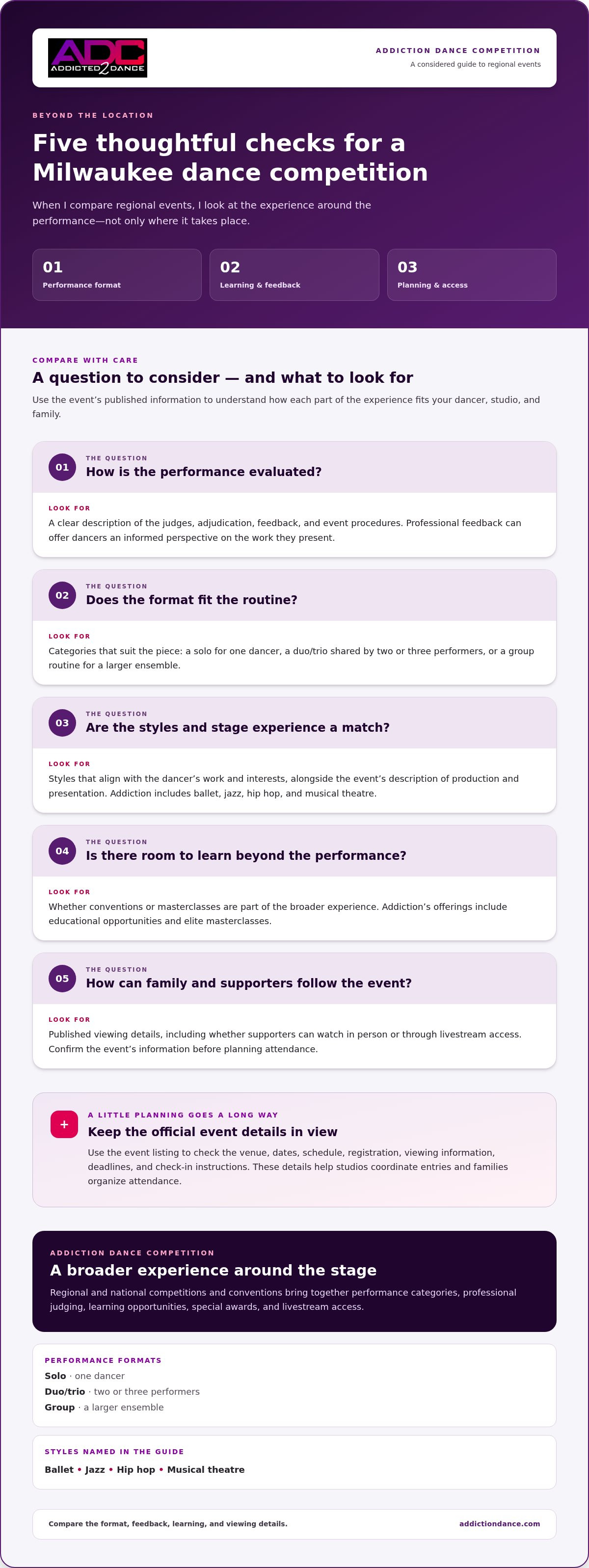
- Judging: Who evaluates performances, and what does the event say about its feedback?
- Production: What does the event communicate about presentation and the stage experience?
- Categories: Are there options that fit the dancer’s performance format and style?
- Learning: Are conventions or masterclasses part of the broader experience?
- Family access: Can supporters watch in person or follow performances through livestream access?
These details help distinguish a performance opportunity from an experience that may also support learning and connection. For general background on how the activity is organized, see Competitive dance. For a specific event, use its official listing to plan around the venue, dates, schedule, registration, and viewing information. Those particulars can shape both studio planning and a family’s day.
How to compare regional competitions around Milwaukee
Compare format, categories, adjudication, and participant experience. A solo gives one dancer the stage; a duo or trio shares the performance among a small group; a group routine involves a larger ensemble. Review the event’s categories and styles, then consider whether its learning opportunities and production approach align with your studio’s goals.
Next, plan travel and attendance. Use the official listing for the event location and schedule, then consider transportation and the needs of dancers and supporters. A clear plan helps studios coordinate entries and families organize their day. Keep the event information handy so everyone is working from the same details.
Who can benefit from a competition experience?
Competition can offer a meaningful goal for dancers at different points in their training, whether they’re building confidence onstage or refining performance skills. The right fit depends on the dancer, routine, and event categories, not simply age or experience. Studios can use the experience to organize performance goals; dancers can focus on presenting their work; families can plan how they’ll support and watch.
For studio owners, the format and event information help guide entry planning across routines. For dancers, knowing whether a piece is a solo, duo/trio, or group performance clarifies who shares the stage and how the routine is presented. For families, viewing details and event logistics make it easier to plan attendance. Each audience has a different role, and preparation helps everyone navigate it.
What dancers can expect at an Addiction dance competition in Milwaukee
A performance is the centrepiece, but the experience around it matters too. Addiction Dance Competition’s regional events combine professional judging with exciting production, giving dancers a polished setting to present their work. Milwaukee-area dancers can take part in Addiction’s regional and national competition offerings and use the official event information to plan around dates, venues, schedules, and registration.
One useful term to understand is adjudication: “Adjudication is professional feedback on a competition performance, offering dancers an informed perspective on the work they’ve presented.” That feedback makes the experience about more than results alone. Dancers can take the stage, share their preparation, and recognize how far they’ve come.
Studios considering the broader journey can also explore The Ultimate Stage: Your 2027 National Tour Guide as they think about how regional performance experiences may fit into longer-term dance goals. The Association of Dance Competitions & Conventions (ADCC) offers industry context for those who want to learn more about the competition and convention community.
Performance categories and dance styles
Addiction offers solo, duo/trio, and group categories. A solo puts one dancer in the spotlight; a duo/trio shares the stage among two or three performers; a group brings a larger ensemble together. Styles include ballet, jazz, hip hop, and musical theatre, giving studios options for varied strengths and artistic interests.
Choose a format that matches the routine and its dancers. A studio might enter an individual piece as a solo while presenting shared choreography as a duo/trio or group. Consider each dancer’s goals, the work they’re ready to perform, and the kind of stage experience that will feel purposeful and rewarding.
Judging, production, and the event atmosphere
Professional judging by industry-respected professionals brings an informed perspective to the performance experience. Focus on the event’s published description of adjudication and procedures rather than assuming a particular scoring formula. This helps dancers and families set realistic expectations and concentrate on presenting prepared, expressive work.
Production also shapes how a performance feels from the stage and the audience. A polished live setting can help each number feel like a special moment, while an encouraging atmosphere gives dancers room to enjoy the experience alongside the focus of competition. Families and supporters can follow performances through livestream access, extending that shared excitement beyond those in the room.
As you consider a dance competition Milwaukee opportunity, look at how performance, professional adjudication, production, and participant experience come together. Addiction’s regional events offer that broader event context. You can explore Addiction Dance Competition event information as you shape your studio’s next performance goals.
How to evaluate a Milwaukee dance competition before registering
Registration is a better decision when it reflects the dancer’s goals, not just the event date. A quick comparison can help studios and families understand what the experience includes, what the dancer is ready for, and which practical details need planning. Use the framework below for any regional event, including Addiction Dance Competition.
| What to compare | Addiction features | What to review in the current event listing |
|---|---|---|
| Format | Solo, duo/trio, and group categories are part of Addiction’s event offering. | Which formats are available for the specific event and how entries are organized. |
| Categories | Styles include ballet, jazz, hip hop, and musical theatre. | Relevant category options and registration instructions for the event. |
| Judging | Professional judging by industry-respected professionals. | Event-specific information about adjudication and any published procedures. |
| Learning | Convention learning and elite masterclasses are among Addiction’s educational opportunities. | Learning opportunities included in the event and how participation is described. |
| Viewing access | Livestream access can help families and supporters follow performances remotely. | Viewing details for the specific event, including livestream information. |
Which event features matter most to your dancer?
Begin with readiness and purpose. A dancer working toward an individual performance goal may prefer a solo, while a shared routine could make a duo/trio or group format a better fit. Then consider style: choose work that reflects the dancer’s strengths and gives them room to grow. Conventions and elite masterclasses offer additional learning opportunities; scholarships and special awards may also be part of the wider experience, without guaranteeing any individual outcome.
What families and studios should compare
Studios can weigh professional adjudication, production, and how the event experience fits their dancers’ goals. Families may focus on participation logistics and how they’ll watch, especially if they can’t attend in person. Livestream access offers a way for remote supporters to follow performances. For a dance competition Milwaukee studios are considering, use the event listing to plan around dates, venue, schedule, and registration instructions.
Keep the general features distinct from details specific to an event. Addiction’s offerings include multiple performance formats, professional judging, learning opportunities, and livestream access. The event listing provides the details for planning participation and registration. First decide what matters to the dancer, then use the published information to shape the studio and family plan.
How to prepare for a Milwaukee dance competition
A calm preparation plan helps dancers focus on the part they’ve worked toward: performing. Start with the event’s official listing, then coordinate entries, refine routines, and organize attendance. For a dance competition Milwaukee studios are preparing to enter, use event information to guide decisions about dates, venue, registration, schedule, and check-in instructions. Details can differ between events, so avoid relying on assumptions from another competition or season.
A practical preparation sequence for dancers and studios
Begin with the published requirements and work outward from there. Studios can use this sequence to keep the process clear and manageable:
- Review the listing. Read the categories, registration instructions, schedule, and stated requirements. Use published deadlines and check-in details to plan rather than assuming they match another competition.
- Coordinate entries. Decide which routines fit the dancers and studio goals, then align participation details with the event’s formats and categories.
- Prepare the routines. Build rehearsal around the selected work. Review choreography, transitions, spacing, and performance focus so dancers know how the piece moves from beginning to end.
- Plan attendance. Organize travel and timing around the listed venue and schedule. Keep plans flexible if details are updated in the official listing.
Preparation should support confident performance, not add unnecessary pressure. A consistent routine review gives dancers a chance to settle into their choreography and arrive ready to share their work. Studios can also make sure each dancer understands their role in a solo, duo/trio, or group piece.
Helping families follow the performance
Families can use the published schedule and venue details to plan attendance around the performances they want to see. Build plans around any stated schedule or check-in time rather than assuming timing or venue procedures. For supporters who can’t be there in person, Addiction’s livestream access offers another way to follow performances. Convention learning and elite masterclasses can complement competition participation, giving dancers additional opportunities to learn without promising any particular result.
Studios considering how competition participation fits into a broader season may find the article Elite Mastery: Navigating the Dance Competition and Convention Circuit in 2027 useful context. The central preparation principle is simple: let event information shape logistics, and let the dancer’s goals shape the work in the studio. That balance helps families feel organized while keeping attention on the performance.
Explore Addiction Dance Competition event details and use the published information to guide your preparation.
Explore Addiction Dance Competition's Milwaukee opportunity
A strong regional competition can bring together the elements dancers and studios value: a meaningful opportunity to perform, professional judging, polished production, and an encouraging atmosphere. Addiction Dance Competition offers that broader event experience, with categories and styles suited to different kinds of routines. For dancers and families considering a dance competition Milwaukee opportunity, the fit comes down to how the event’s performance experience and learning options align with the dancer’s goals.
It’s a thoughtful option for studios seeking a stage where preparation meets professional adjudication, and for dancers ready to share their work with an audience. Families are part of that experience too, whether they attend in person or follow performances through livestream access.
Competition and learning opportunities in one organization
Competition, conventions, and elite masterclasses each play a distinct role. A competition gives dancers a structured performance opportunity with professional judging. A convention offers a setting for dance learning, while elite masterclasses provide another opportunity to develop through instruction. These experiences can complement one another, but dancers and studios can consider them separately based on their interests and plans.
Scholarships and special awards may also be part of the wider competition experience. They can recognize dancers in different ways, but no individual outcome is assured. Lasting value can come from showing up prepared, taking in professional feedback, and continuing to grow through performance and learning opportunities. Studios exploring how events and education can fit together may find Elite Mastery: Navigating the Dance Competition and Convention Circuit in 2027 a useful companion read.
Take the next step toward the stage
Addiction’s regional competition experience can suit dancers who are ready to perform as soloists or alongside partners and groups, and studios looking for a professionally judged event with a lively presentation. Families can consider whether attending in person or following through livestream access best fits their plans. The right fit is personal: it should reflect a dancer’s readiness, a studio’s aims, and the kind of experience everyone hopes to take away.
Review the official event information and registration details to plan around dates, venue, schedule, and instructions. Then choose the participation path that feels right for your dancer and studio.
Explore Addiction Dance Competition
Choose the stage that moves you forward
The right next step is the one that gives a dancer something meaningful to work toward. As you consider a dance competition Milwaukee opportunity, think about the experience you want to build, whether that means stepping into a solo, sharing the stage with others, or exploring new ways to grow through dance.
Addiction Dance Competition brings performance and learning together through competition categories, conventions, and elite masterclasses. Professional judging and exciting production help shape the event experience, while livestream access lets supporters follow along from a distance. Scholarships and special awards can add further possibilities, without taking away from the value of showing up, performing, and continuing to develop.
Use the official site to explore event details and registration information, then decide what feels like the right fit for your dancer or studio. A thoughtful choice can turn preparation into a moment of pride and a fresh source of inspiration.
Explore Addiction Dance Competition and take your next step toward the stage.
Frequently Asked Questions
How do I find a dance competition in Milwaukee?
Start with Addiction Dance Competition’s official event listings for regional and national competitions. Use the event information to plan around dates, venue, schedule, and registration instructions. A dance competition Milwaukee dancers are considering should fit the studio calendar and the dancer’s plans. Share the listing with studio staff and family members coordinating attendance.
What should I look for in a Milwaukee dance competition?
Look for an event that fits the dancer’s routine, readiness, and goals. A newer competitor may feel most comfortable with a piece they know well, while a more experienced dancer may want to take on a fresh artistic challenge. Families can consider how they’ll follow the performances, too. Reviewing participation and viewing information together helps everyone understand what the event day involves.
Can dancers of different skill levels compete with Addiction Dance Competition?
Yes. Addiction Dance Competition welcomes dancers of all ages and skill levels. That doesn’t mean every dancer enters the same category; the right participation choice depends on the event’s options and the studio’s plan. Studio leaders can help match a dancer’s routine and experience with an appropriate entry. Families can use the event’s registration information to understand the steps for their chosen competition.
What dance styles can compete at an Addiction Dance Competition event?
Addiction events include ballet, jazz, hip hop, and musical theatre. Each style brings its own movement vocabulary and performance character, so studios can consider which best reflects the choreography and dancers’ training. For example, a routine built around theatrical storytelling may suit musical theatre, while a piece grounded in classical technique may fit ballet. Use the event information when selecting an entry.
How does judging work at a dance competition?
Addiction Dance Competition performances are judged by industry-respected professionals. Use the event’s published information for details about its scoring or feedback format rather than assuming a particular rubric. After the performance, dancers can discuss feedback with their instructors and decide what may inform future practice. This makes adjudication a useful part of reflecting on the work, alongside the experience of performing.
Can family members watch a dance competition online?
Yes. Addiction offers livestream access so families and supporters can follow competition performances remotely. It can help a relative who can’t travel feel included in the dancer’s event day. Share the event’s viewing instructions and access details with supporters before the competition. Reviewing the schedule can also help everyone plan around the performances they hope to watch.
Are conventions or masterclasses part of a dance competition experience?
Conventions and elite masterclasses are learning opportunities offered by Addiction Dance Competition alongside its competition offerings, though each is a distinct experience. They give dancers a chance to learn from industry-respected teachers and choreographers and explore technique and artistry beyond their competition routine. Event information describes the learning opportunities and participation details for each event.


